
First light is no wake-up call on the frontline of conservation – our ranger teams in Botswana, Namibia and South Africa are out in the reserves well before the sun begins its upward glide. As World Ranger Day dawns on July 31st it’s our opportunity to celebrate the tireless work of these intrepid teams across our camps.
“The steadfast work of a wildlife ranger is an essential part of protecting wildlife and, in most cases, goes beyond anti-poaching patrols,” shares our Chief Impact Officer and Co-Founder Dr Jennifer Lalley. “It’s also about monitoring animal populations, educating local communities and protecting habitat from threats such as encroachment, invasive species or fire. There’s a level of dedication and perseverance needed to effectively carry out this work day in, day out. Not many people have what it takes and those who do, do it quietly. They are the unsung heroes of conservation.”
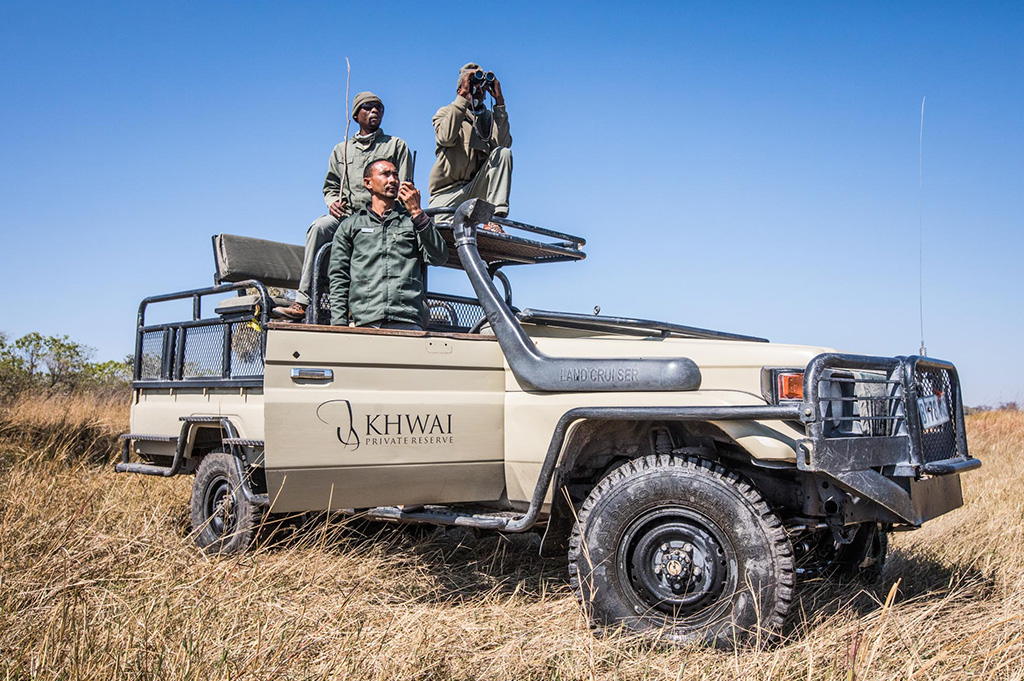
KHWAI PRIVATE RESERVE, BOTSWANA
Project: KPR Wildlife Monitioring
Size: 200,000 hectares
Key species: Lion, leopard, cheetah, African wild dog
Some of our most prominent rangers can be found over in Botswana’s Okavango Delta. Khwai Private Reserve had a history of hunting and poaching when Natural Selection and partners took it over in 2017. A great many hours were spent by the rangers locating and habituating the wildlife, clearing snares and working with the local community to address illegal bushmeat hunting and fishing. Within just two years, general game showed significant recovery and predator sightings became the norm.
These rangers have carried on as a proactive wildlife monitoring and land protection team ever since. They’re equipped with all the tools they need to be effective on the ground, including binoculars, rain gear, cameras, two-way radios, GPS communications devices, drones and tablets used to record wildlife sightings, patrol routes, and incidents in real time. In some parts, they also use motorbikes and more recently quad bikes to patrol the harder to reach areas of the reserve where terrain is trickier to navigate.
Training plays a critical role in safeguarding a reserve of this scale. Beyond the routine patrols, rangers are trained in population monitoring, invasive species management and the identification and protection of endangered tree species. At KPR, the ranger team even run the central weevil breeding lab that supplies land managers across the Okavango with these important controllers of invasive aquatic plants. Together, consistent field presence, proactive land and waterway management and reliable data collection strengthen day-to-day protection while informing longer term conservation planning and management decisions. Their hard work, day in, day out has resulted in Khwai Private Reserve becoming an essential area for wildlife movement and thus offers engaging year-round wildlife sightings.
Guests with a particular interest in conservation are able to see the rangers’ work first hand on our KPR Ranger Experience in which they rise early and head out to accompany the team as they monitor and safeguard this beautiful wilderness area.
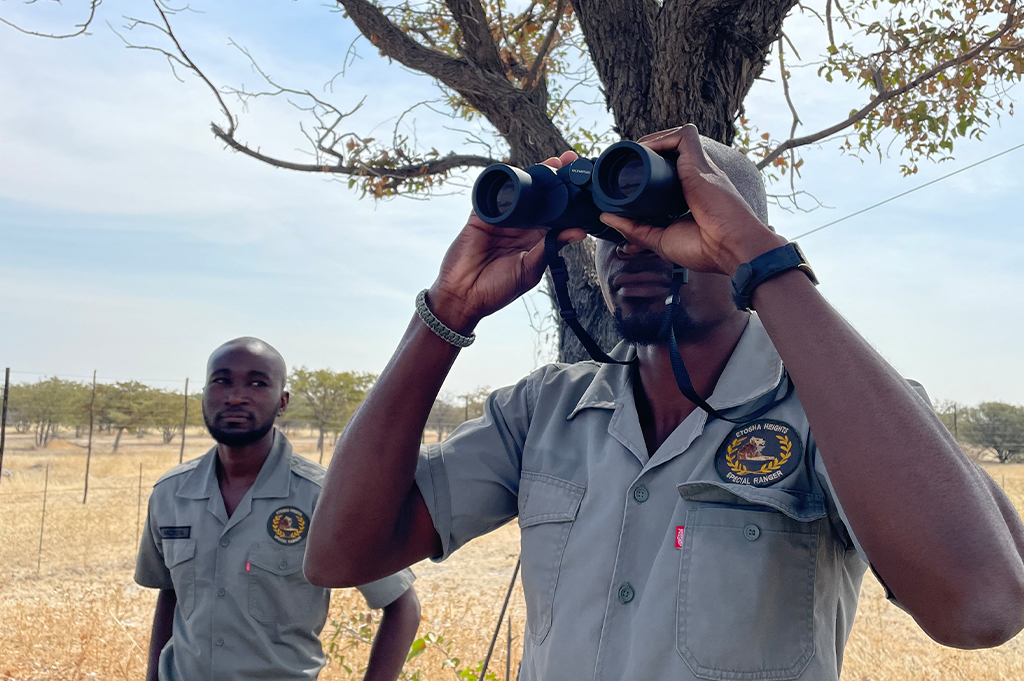
ETOSHA HEIGHTS PRIVATE RESERVE, NAMIBIA
Project: Etosha Heights Wildlife Monitoring
Size: 60,000 hectares
Key species: Black rhino, white rhino, black-faced impala, lion
Over in Namibia meanwhile, we have a similar team to keep the wildlife in Etosha Heights Private Reserve safe from harm. This reserve was once fragmented farmland, but it’s now been restored to an unfenced wilderness where wildlife moves freely across 60,000 hectares. Since 2017 it has formed a vital buffer along the southern boundary of Etosha National Park, helping reconnect habitats across the wider Etosha ecosystem.
This reserve has become a conservation success story with species including black and white rhino, elephant, black-faced impala, sable antelope and lion roaming the landscape. The reserve also supports important roosting and bathing sites for Namibia’s vulnerable white-backed and lappet-faced vultures.
As protectors of rhinos, this team of rangers work around the clock to track animals, deter illegal activity and respond to threats. The rangers are equipped with thermal imaging, night-vision equipment, surveillance cameras, radios, satellite phones and drones. A growing camera network strengthens early detection and response. Ongoing training and equipment upgrades keep teams effective, and include specialised rhino monitoring training based on IUCN African Rhino Specialist Group best-practice guidelines and adapted locally by Save the Rhino Trust.
Together trained rangers and careful monitoring help Etosha Heights Private Reserve remain a safe place for wildlife. Through the dedication of this team, wildlife here will remain protected and Etosha Heights continue to be custodians of rhino long into the future.
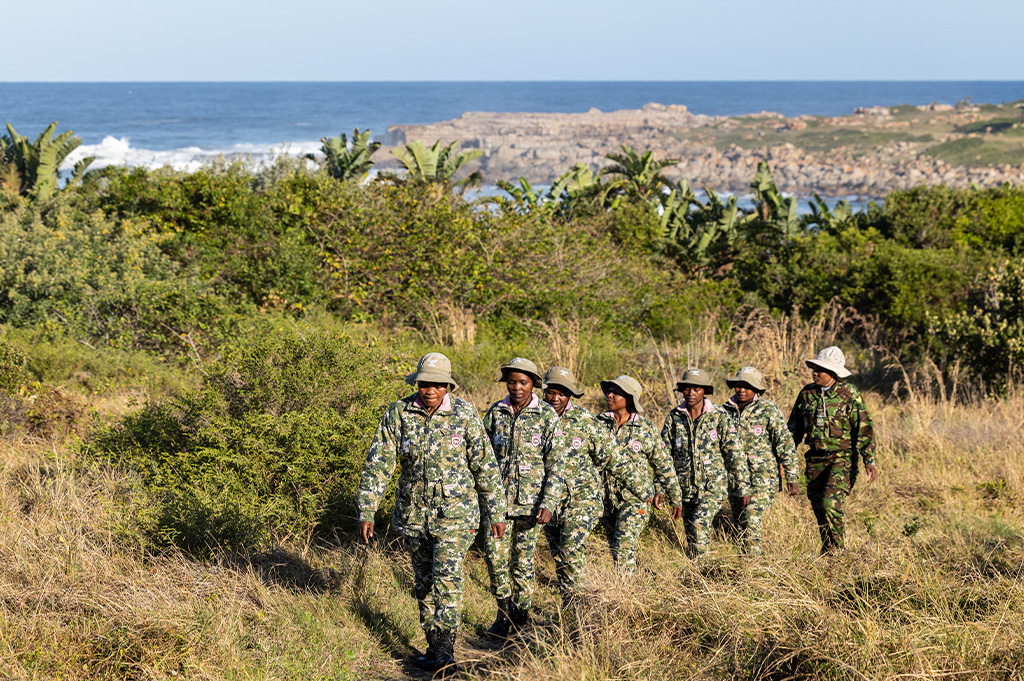
MKAMBATI NATURE RESERVE, SOUTH AFRICA
Project: Green Griffons
Size: 7,000 hectares
Key species: Zebra, eland, red hartebeest, blesbuck
The newest ranger team is also the first all-female ranger team in the operation. The Green Griffons are a dedicated team of all-women wildlife patrollers from the local community who are guardians of the 7,000 hectare Mkambati Nature Reserve. They underwent a strict selection process and have recently completed their training in 2026. The Green Griffons’ responsibilities encompass wildlife monitoring, de-snaring, species identification, marine coastal patrols, movement tracking within the park and surveillance efforts. These women act as the eyes and ears of the reserve, proactively driving vital anti-poaching initiatives by swiftly reporting any signs of poaching and illegal activities to the relevant authorities, including Eastern Cape Park and Tourism Agency (ECPTA) and local law enforcement.
On average, each team walks 641 kilometres each month – covering around 21.4km every day. Working in different countries, across different landscapes, but performing the same crucial work – our rangers help ensure the future of these wilderness areas and the life within them.
HOW CAN YOU HELP?
If you’d like to make your own donation: CLICK HERE and help support our frontline teams out in the field. The work of these rangers is supported through Natural Selection Foundation and the Conservation, Community & Reserve (CCR) fee that every guest contributes, helping sustain long-term protection efforts.
Here’s what your money could do:
$50 – funds one month of fuel for ranger boat and quad bike patrols in Khwai Private Reserve
$200 – funds one month of fuel and running costs for the Green Griffons ranger vehicle or one camera trap in Khwai Private Reserve
$300 – funds one month of fuel for gyrocopter aerial patrols in Etosha Heights Private Reserve
$350 – funds one month salary for a Green Griffon ranger
$500 – funds Garmin InReach device subscriptions and administration costs for the anti-poaching team in Etosha Heights Private Reserve Or funds equipment for one ranger conducting quad bike patrols in Khwai Private Reserve
$550 – funds one Garmin InReach device for use in remote areas of Khwai Private Reserve
$650 – funds ground crew mobilisation and fuel supply for a game count in Etosha Heights Private Reserve
$1,300 – funds one month of fuel for ranger patrol vehicles in Khwai Private Reserve
$1,500 – funds an aircraft for an aerial survey game count in Etosha Heights Private Reserve
$7,000 – funds one specialised surveillance drone in Khwai Private Reserve
Another fantastic way to support the rangers is by staying at one of our camps so that in addition to the CCR fee, 1.5% of every booking at our lodges goes directly to protecting wildlife, habitat and supporting the communities who live alongside wildlife. CLICK HERE to take a closer look at our portfolio of welcoming camps and lodges.