HOW GIVING THEM FREE PASSAGE KEEPS ELEPHANTS AND HUMANS SAFE.
What do elephants really need?
Elephants don’t ask for a lot – they need food (and a lot of it), diversity of vegetation, salt and minerals, water (unless desert-adapted these pachyderms drink 100 to 200 litres of water a day, and that’s before they start splashing around and bathing in it), shade, and being social animals with intricate hierarchies, they need other elephants. But they’re huge – and they also need space.
So what’s the problem?
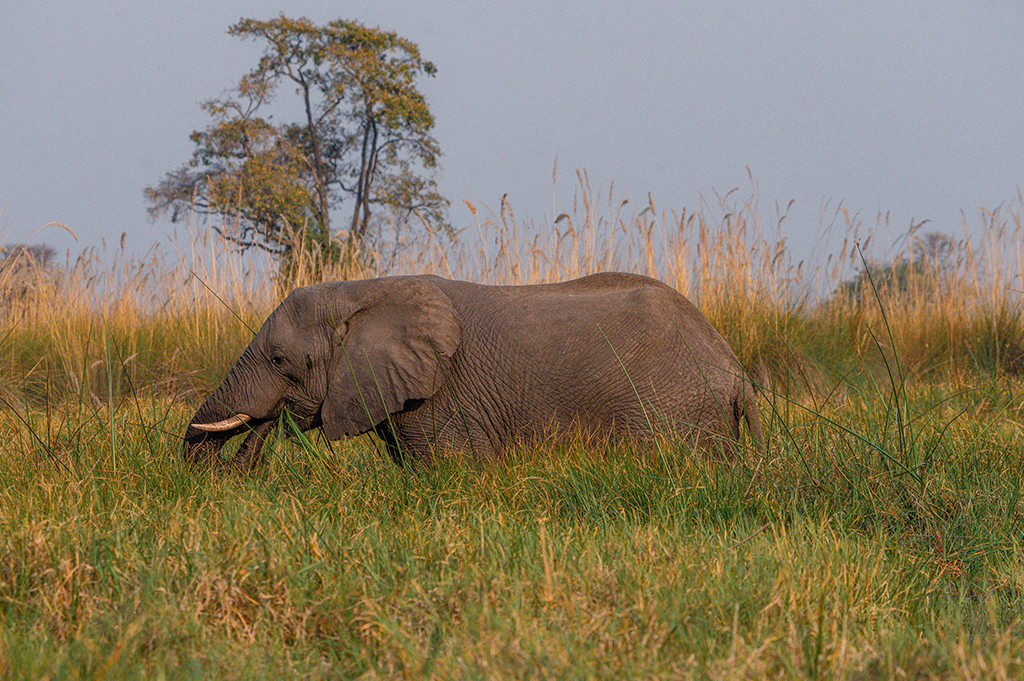
The biggest threats to elephants are poaching, habitat loss and human conflict – three hazards that are somewhat linked and exacerbated by elephants and humans living in close proximity to one another. Changes in land use through elephants’ African habitats – often for farmland, mean that many of the routes elephants have historically used to move between areas have been cut off, and many of the regions they once roamed have been dramatically condensed as communities have grown and smallholdings have been established. That means the largest land mammal on Earth is living in some rather cramped conditions.
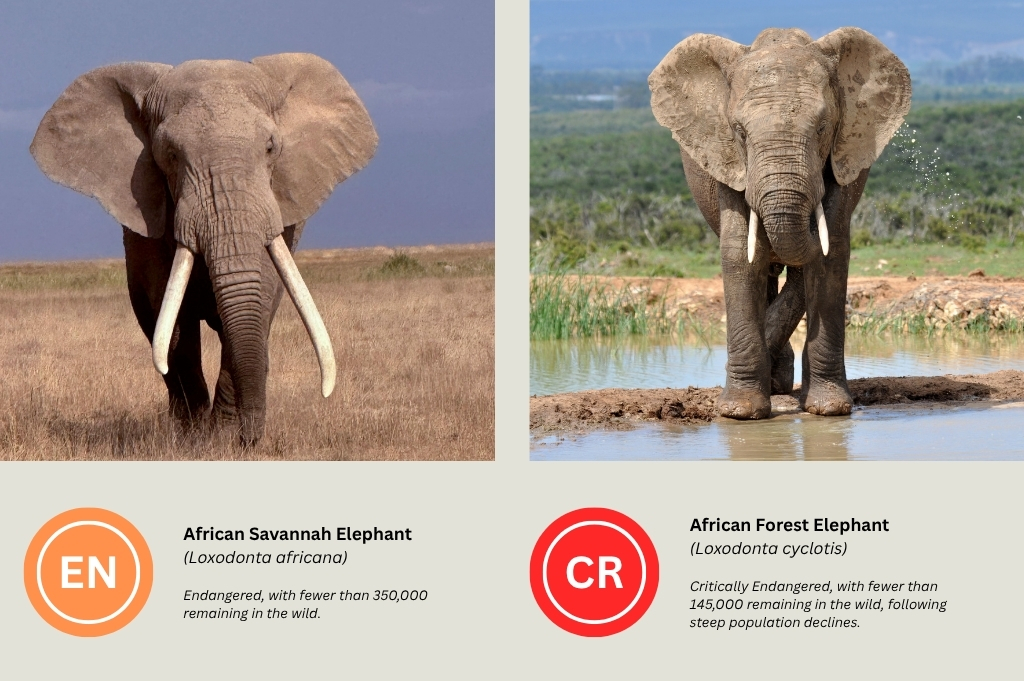
This limits the gene pool, diet diversity and access to water, particularly as climate change impacts the African continent. It also means that humans and elephants are increasingly sharing space, with elephants raiding crops as a food source, and the two species regularly running into one another along routes frequented by both – sometimes with tragic circumstances. All these things mean that the communities in wilderness areas often see elephants as pests rather than bastions of their homeland. The IUCN Red List currently classifies the African savannah elephant (Loxodonta africana) as Endangered. Over the past 50 years their numbers have fallen by at least 60% primarily due to the illegal ivory trade and habitat fragmentation.
What are we doing and where?
We make a difference to the lives of elephants and the people living close to them by giving the elephants two of the things they need the most – space and freedom to roam.
HOANIB RIVER VALLEY
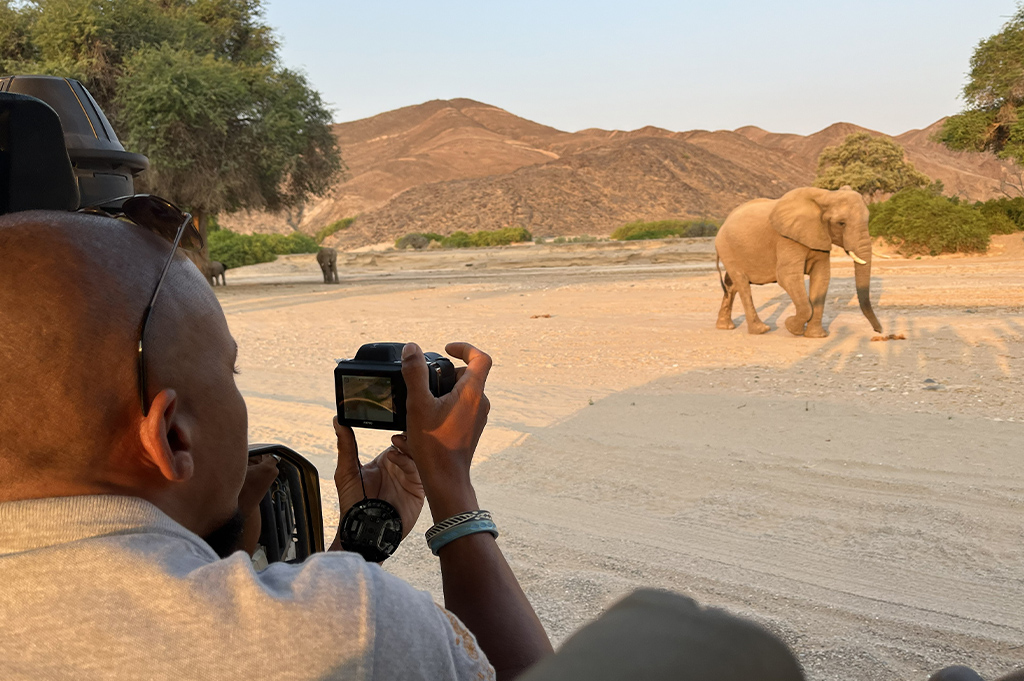
Our newly opened Hoanib Elephant Camp in the rugged heart of Namibia’s Kaokoland is so elephant-orientated it’s named after these great ghosts of the desert. This solar-powered camp sits quietly in tribute to the world around it. This is an ancient place carved by water and wind, and the elephant who roam the desert valleys have adapted specifically to life here. Both Hoanib Elephant Camp and the nearby Hoanib Valley Camp support the African savannah elephant monitoring in northwest Namibia project.
The aim of the project is to monitor the long-term population dynamics and spatial use of the desert-dwelling elephant in Northwest Namibia. Additionally, the impacts of tourism, land use and habitat feature on their movement behaviour will be assessed and this information will contribute to better understanding human-elephant conflict, inform guides as well as management recommendations. Ultimately, the project will indirectly support income revenue through tourism. The focus sites for monitoring the desert-dwelling elephant in Northwest Namibia are the lower Hoanib and Hoarusib Rivers.
Currently, targeted monitoring and research of the desert-dwelling elephant is limited. An international research group currently conducts one annual survey in Northwest Namibia, and there are large gaps in our understanding of this elephant population and their activities as a result of limited field observations. Additional to providing valuable insights into this local desert-dwelling elephant population, the findings will contribute to a better understanding of the conservation status and ecology of elephant Africa wide.
NKASA RUPARA NATIONAL PARK
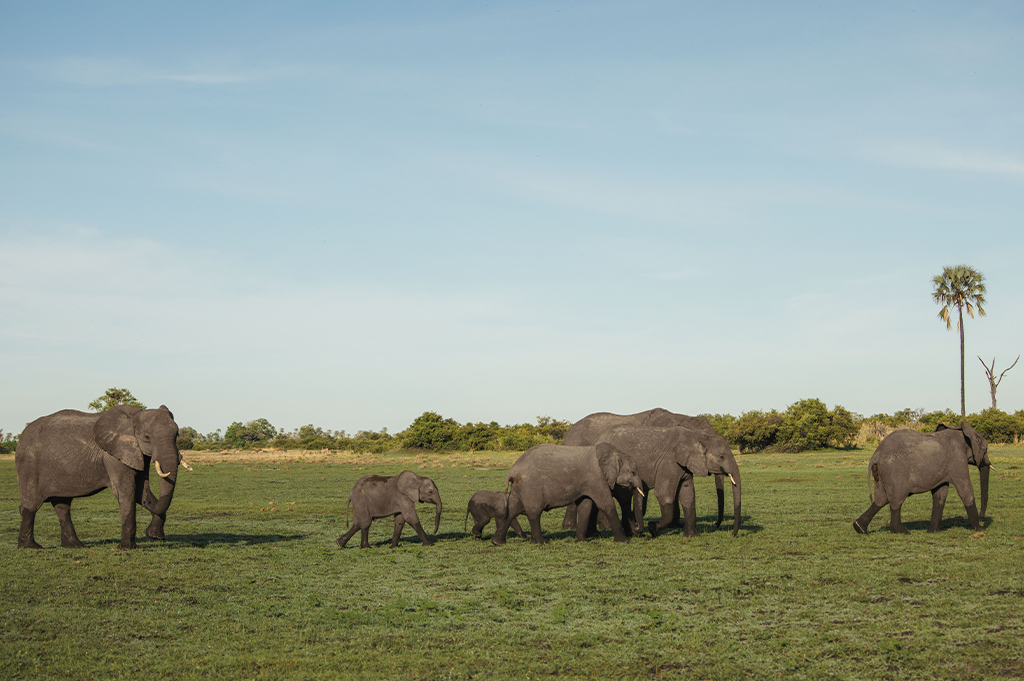
Over to the east of Namibia – far far east, in the Zambezi Region sits another of our new additions – the serene Nkasa Linyanti. Poking out, as the Zambezi Region does, this might appear a forgotten finger of Namibia’s great desert landscape, but this protrusion forms part of the Kavango-Zambezi Transfrontier Conservation Area. Nkasa Linyanti sits within Nkasa Rupara National Park – a vital wildlife corridor linking Botswana, Angola, Zambia and Namibia. The park borders three of Botswana’s most iconic reserves – Linyanti, Kwando and Selinda – and with the park entirely unfenced and minimal development in the region, wildlife here moves freely across national boundaries, parks, and ecosystems, resulting in remarkably rich and diverse game viewing. Elephants migrate in impressive numbers along the ancient routes that run through this vital corridor.
We invested in this area in order to create big picture that incorporates corridors and safe spaces through which elephants can move across countries and boundaries – in and out of neighbouring Angola for example. We also support the area’s anti-poaching team and have donated a vehicle and boat to help ensure safe movement for elephants.
BOTSWANA
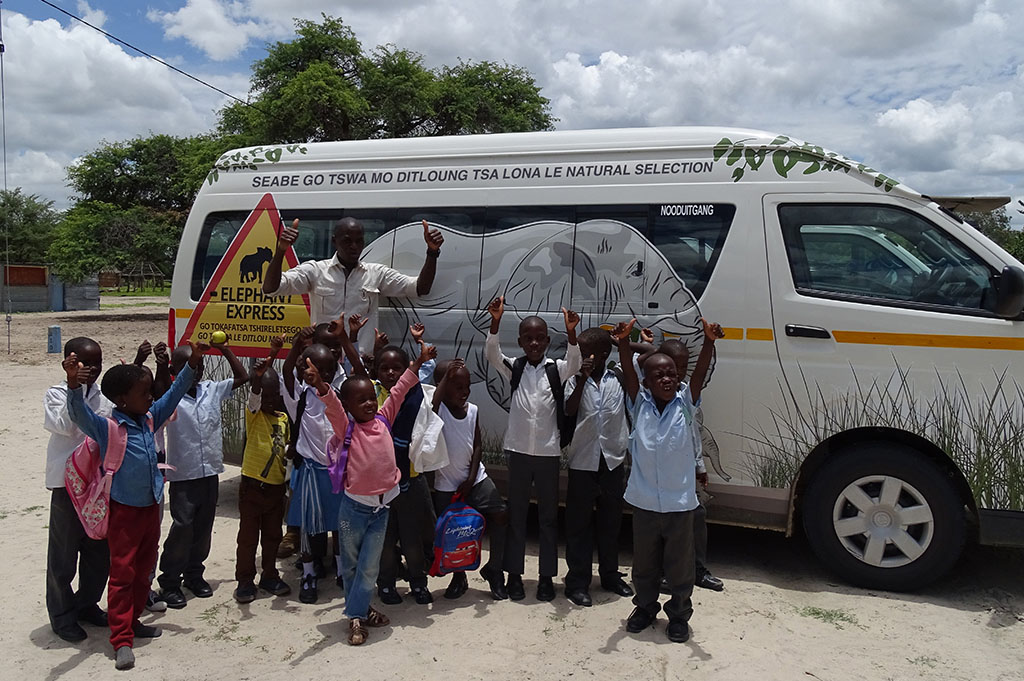
Then there’s our award-winning Elephant Express in Botswana – our recently expanded fleet of buses that help elephants and humans avoid one another along busy routes utilised by both species. We partner with EcoExist, the Okavango Community Trust and Nakwa Safaris to fund four buses that transport children safely to schools in Eretsha, Beetsha and Gunotsoga, and community members safely to clinics in Gudigwa, Seronga and Beetsha.
School attendance and academic performance have improved each year the buses have run – a beautiful success story for the elephants and the communities close to them.
ELEPHANT CONSERVATION FAST FACTS
Africa is home to two elephant species: the African Savannah Elephant (Loxodonta africana) and the African Forest Elephant (Loxodonta cyclotis), both facing significant conservation challenges. Both are facing various threats like poaching, habitat loss, human-elephant conflict and naturally slow reproductive rates.