
Scott Ramsay visited Meno a Kwena in May 2026 to witness the positive impact that regenerative tourism can have on conservation and communities.
A thunderstorm woke me up in the middle of the night. A lightning strike, then the deafening crack. I lay awake in my warm bed at Meno a Kwena lodge, listening to the mesmerizing sound of rain falling in the Kalahari.
Meno A Kwena is perched above the Boteti River in central Botswana. Usually the Boteti is a dry subterranean river, its water hidden a few metres below the sandy soils. But at the start of 2026, for the first time in many years, the river started to flow strongly again on the surface. It was proving to be one of the wettest years in decades.
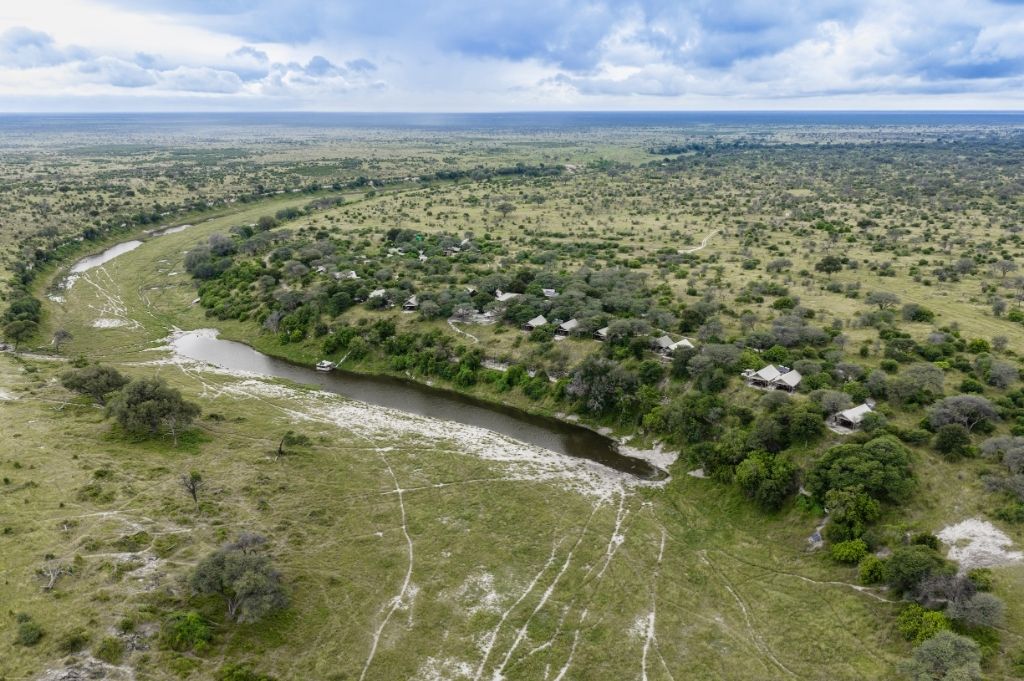
In the morning the rain eased up, and I was picked up by Walona Sehularo from Elephants for Africa. This non-profit organization works with communities in this area, about 150kms south-east of Maun, the country’s “safari capital”. We headed in his Toyota pick-up to the small town of Moreomaoto.
“We are obsessed with water in Botswana,” said Walona as we drove the sandy track. “The Boteti flowing again is a big event for us.”
Pula. The word means “rain” in the local language of Setswana, but it’s also the name of the national currency, and on the country’s coat of arms, the motto simply says “pula”.
Meaningfully, the word is also used as a blessing to wish people luck. Botswana is a semi-arid country slap-bang in the middle of the Kalahari, the largest sand mass on Earth. Droughts are common. Annual rainfall measures between 250mm and 700mm, but is highly unreliable, and evaporation rates are extreme, with daytime temperatures sometimes touching 45 degrees.
Unsurprisingly, Botswana’s 2,7 million people make no distinction between fresh water and prosperity, their nation’s or their own.
“Water is everything to us,” said Walona. “And water is everything to the elephants too.”
Sharing space with giants
Earth’s biggest land mammal has kept Walona busy since 2018. Elephants for Africa started out as a scientific research organisation, monitoring the movements of elephants in Makgadikgadi and Nxai Pans National Parks. But increasingly, the organisation has focused on helping communities to live with these very large – and sometimes dangerous – wild animals.
“In the 1930s, 40s and 50s, there were very few elephants in these central areas of Botswana, because colonial hunters in the late 1890s and early 1900s had shot most of them,” explained Walona.
When the mass hunting of the colonial era ended, Botswana’s elephant population increased steadily again.
“In the following decades, there were civil wars in Angola, Namibia and DRC. There was also extensive culling of elephants in Zimbabwe. The elephants of the region realised that northern Botswana was a safe haven,” Walona told me.
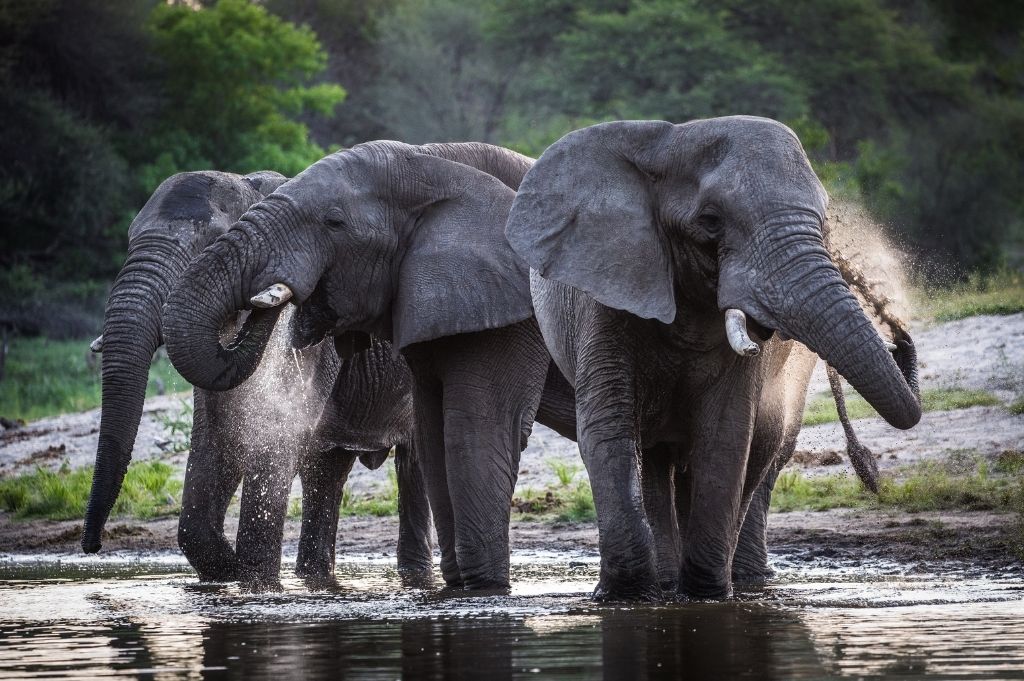
If you are an elephant, then you’d want to live in northern Botswana, where the Chobe, Linyanti and Okavango Rivers supply abundant water, even during dry seasons, and vast mopane woodlands supply an endless supply of nutritious, protein-rich food. Happy, safe and well-fed, the elephant population of northern Botswana grew quickly.
While many other countries in Africa have struggled to conserve their elephants, Botswana has had exceptional success. Today, the nation is home to about 135 000 elephants, roughly a third of Africa’s total population, and almost all of them have lived in the north of the country – until recently.
Further south, where rivers and natural surface water are rare , free-range cattle farming predominates. It’s one of the most important industries in Botswana, with a national herd of about 2 million cattle, as well as about 1,5 million goats.
All this livestock needs water to drink on a daily basis, especially during frequent droughts, so farmers have installed thousands of new boreholes across the semi-arid landscape. With increasing fresh water availability, more and more elephants are moving south. Simultaneously, the human population has grown too.
“Conflict is inevitable,” said Walona. “In some ways, our country has become a victim of its own success at conserving elephants.”
But conflict was certainly not evident as we drove into Moreomaoto, a village of about 600 people, with neat homes and tidy yards. Young kids were walking to school, waving at us, and locals were sweeping their porches. There are small fields planted with maize, sorghum, millet, pumpkins and beans, all vital sources of nourishment in a small, isolated village.
Moreomaoto epitomes Botswana’s friendly reputation as a peaceful country with welcoming people. Yet it also symbolises one of the country’s major challenges – that of its rural people having to live alongside an abundant wild animal population.
The town is almost surrounded by the Makgadikgadi Pans National Park, and like most other towns in Botswana, there are no barriers or fences to stop wild animals from roaming into the village. As in countless other settlements across northern and central Botswana, random encounters with wild animals are part of life.
Giraffe and kudu feed on acacia thorn trees that line the streets. When the impressive zebra migration arrives in winter time around July, thousands of the striped equines move past town.
Hyenas regularly wander through the village at night, and tracks of leopard are sometimes seen. Lions also make their appearance. These three predators are nocturnal, so people rarely encounter them.
Elephants, however, have become the most worrisome problem.
“In 2010, it would have been very rare to see an elephant near Moreomaoto,” Walona told me. “Now they’re around here every day.”
These days the huge animals regularly come close to the village, as they make their way into and out of the national park. Increasingly they are drawn to artificial waterholes, especially in a drought year. And then they smell the farmer’s fields.
“A farmer can lose their entire crop in one night to a hungry elephant.”
For a local farmer who grows food to feed themselves and their family, an elephant is not just an inconvenient nuisance, but a serious threat to the community’s wellbeing.
At first glance, Moreomaoto seems like any village anywhere in the world. Yet here, and many other villages of Botswana, the people are sharing their streets with wild animals, including one that can weight up to six tons, and toss a human like a toothpick.
At least 60 people have been killed by elephants in Botswana since 2018, and hundreds of small crop fields are raided by elephants annually.
“It’s a serious reality for us,” said Walona. “Some locals have told us that people in America or Europe wouldn’t want elephants in their neighbourhoods, which is true probably .”
Finding solutions to a big problem
We stopped at a plot of land within a stone’s throw of the slow-flowing Boteti River, and a local Motswanan woman greeted us with a big smile. Her name is Diana James, and she had planted her field with maize and millet. Walona’s colleague Tatego Bolekanye was there too.
Diana’s English is limited, and my Setswana even more so, so Tatego translated for me as we chatted.
“She’s happy this year,” Tatego told me. “With all the rain, she’s had a very good harvest”.
Most importantly, the elephants haven’t raided her field, because there’s an electric fence around her plot of land. Powered by electricity generated by a few solar panels, the fence runs at voltage of around nine thousand volts, a significant shock to any elephant that tries to pull the fence down
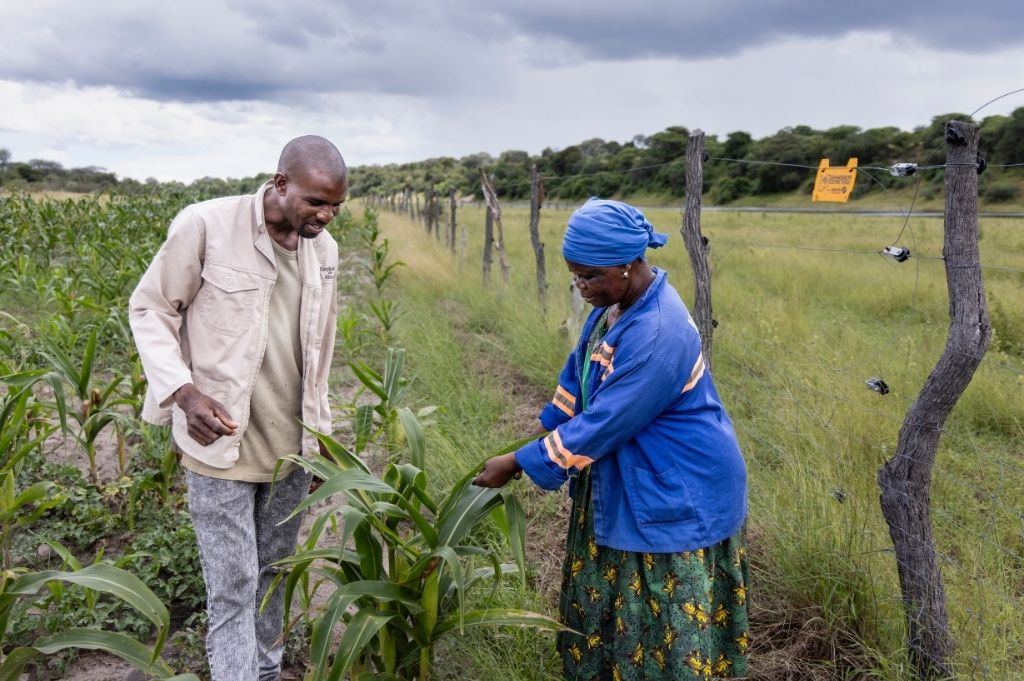
The fence has two electrified wires at about the height of an adult elephant’s mouth. The wires are strung up on sturdy mopane branches that have been dug into the ground. It’s a rudimentary set-up, but it’s proving highly effective at keeping hungry elephants at bay.
Diana walked us through her field of millet, clearly proud of her bountiful crop. She then took us into her small storage room, made of mud, where a huge pile of harvested millet was stored. There were also two lead-acid batteries, a small energizer and cables running outside to power the electric fence.
“One battery is usually enough to power the fence, but we give the farmers two batteries, for days like today when there’s heavy cloud cover,” Tatego told me.
Walona, Tatego and the rest of the Elephants for Africa team have helped more than 220 small-scale farmers like Diana, not only in Moreomaoto, but also the nearby villages of Rakops, Motopi, Puduhudu and Khumaga, where the organisation first established itself.
The farms range in size from 10 hectares up to 1 000 hectares, and farmers are encouraged to cluster their farms together to make installation of fences more cost-effective. So far, a total of about 2 500 hectares – or 25 square kilometres – have been protected from elephants.
Elephants for Africa provide the initial funding for the batteries, solar panels and wire fencing. A cluster farm of about ten hectares costs about US$5 000 to fence.
“The costs of the solar panels and batteries are coming down all the time, and that has made these fences much more scalable. A few years ago, it was very expensive, but now they’re much cheaper, thanks to China producing them in such high quantities.”
The funding for Elephants for Africa comes from a variety of sources, but mostly Meno A Kwena, whose owners Natural Selection donate 1,5% of every guest’s stay at the lodge to communities, through their non-profit foundation.
Natural Selection Foundation is our longest, most consistent donor,” said Walona. “We know we can rely on them every year for funding.”
Walona emphasised that the fences have proven highly effective, but with a proviso.
“We’re almost in a position now where farmers will never have to worry about elephants damaging their crops. But only if the farmers are prepared to maintain their fences and solar systems. Otherwise elephants can easily break through.”
Walona also encourages farmers to move their plots of land away from the elephants’ typical travel routes.
“Elephants have their highways in and out of the park, so we don’t want to get in their way.”
Walona has been working at Elephants for Africa since 2018.
“My job is simple: listen, listen, listen. I figure out what people need and then liaise with the lodges and government to come up with solutions. I also spend a lot of time chatting with farmers about elephant behaviour and social structure.”
“Eventually, farmers start humanising elephants. They realise that elephants are similar to humans, with their social structure, how they behave. They’re not just these monsters of destruction. Elephants are just trying to survive like the farmers are.”
Walking with elephants
One afternoon at the end of my stay at Meno A Kwena, I decided to see for myself what it’s like to be a local living in this part of Botswana. So I went for a walk on my own. I parked my Ford Ranger near the low electrified fence that surrounds the lodge, and wandered along the sand track that runs for about 10kms to Moreomaoto.
The veld was buzzing with life after the rainy season. Hundreds of brown-veined white butterflies flew around me, and terminalia trees were groaning under the weight of their purple seed pods.
I could hear the bells on a small herd of cattle in the distance as they grazed on the lush grass. Yellow-billed kits soared above me, and a fish eagle called near the river. The Kalahari at the end of summer is a magical place to be.
After about 20 minutes I saw two elephant bulls walking slowly towards me, about 100 metres away. They hadn’t picked up my scent yet, nor had they seen me.
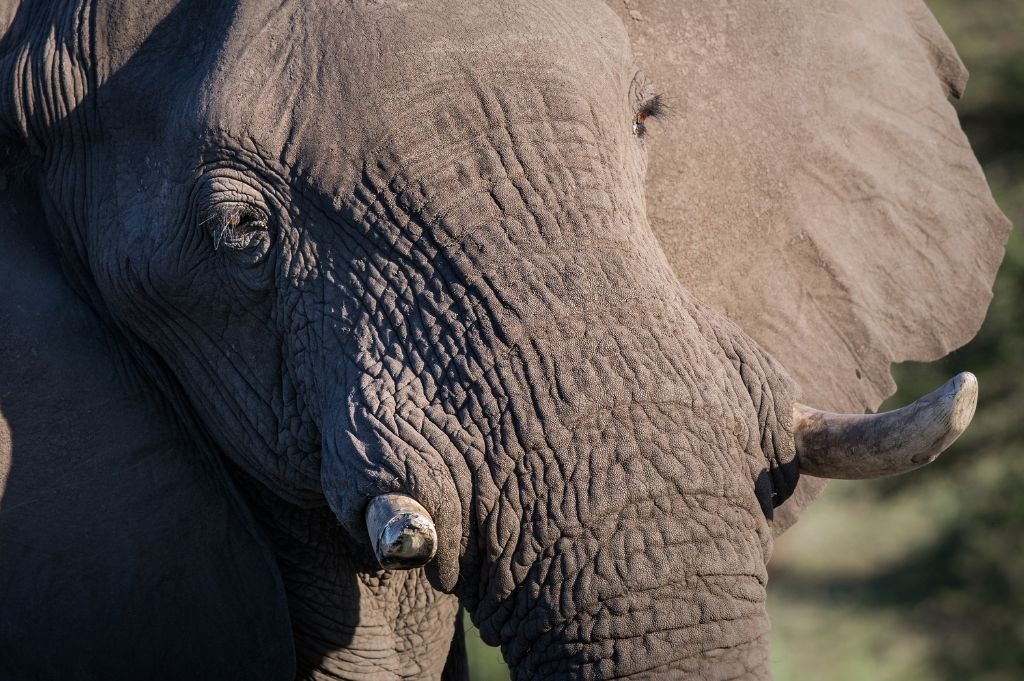
With no car, I suddenly felt a little vulnerable. The elephants seemed relaxed, walking slowly and feeding. But I didn’t want to get any closer. I promptly turned and walked back to my car, much more aware of my insignificant human frame.
Tourists come from all over the world – mostly wealthy countries – to see Botswana’s huge numbers of elephants, but it’s almost always from the safe confines of a game drive vehicle, driven by an experienced guide.
However, after my short walk and my time with Walona, I understood much better why most locals are simply trying to get as far away as possible from the big grey animals.
“Since we started working here,” Walona told me later, “the anger of the people has gone away a little. Farmers definitely don’t love elephants, but they have begun to tolerate them – but only if solutions are available.”
Sidebar – Environmental Education Club and Elephant Behaviour Workshops
Elephants for Africa run workshops for local people to learn how to encounter elephants safely. “We see that once we solve the crops issue, then the main issue is how to deal with elephant encounters,” said Walona.
“That’s why we do the workshops on elephant behaviour, and teaching people how to react when elephants approach them, or if they bump into one. They’re still afraid of course, but they know how to navigate encounters.”
Additionally, Walona and his team also run environmental education clubs at the various schools in the Makgadikgadi region.
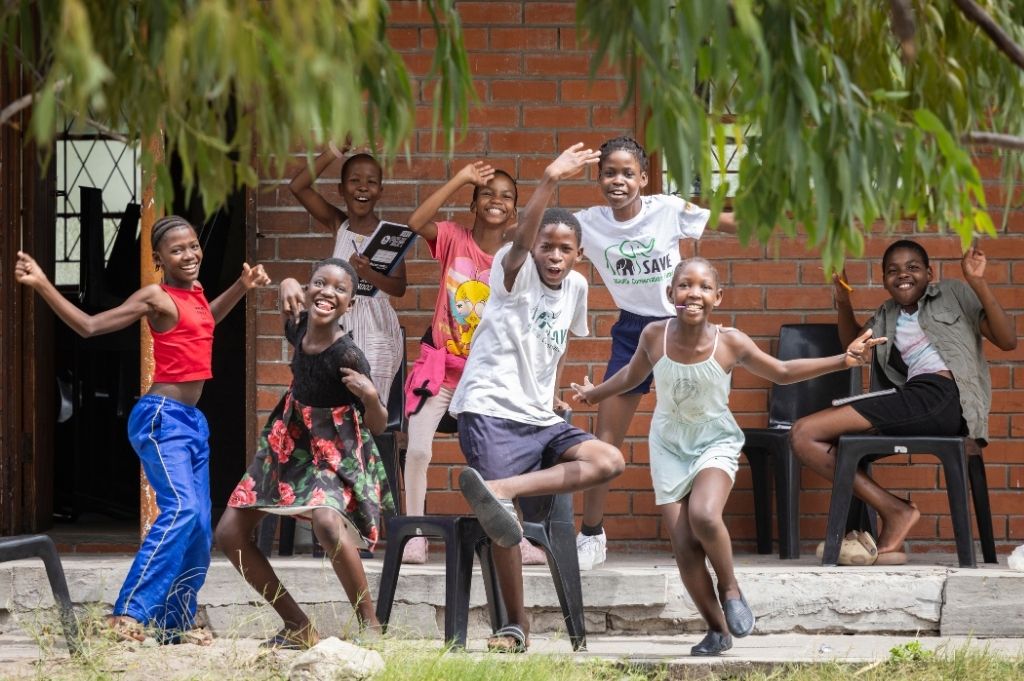
On my first afternoon at Meno A Kwena, I attended a class that was taking place under the shade of a large tree in Moreomaoto’s school. About 27 children from the ages of 9 to 12 were listening to teacher Kemoneetswe Mphanyanee.
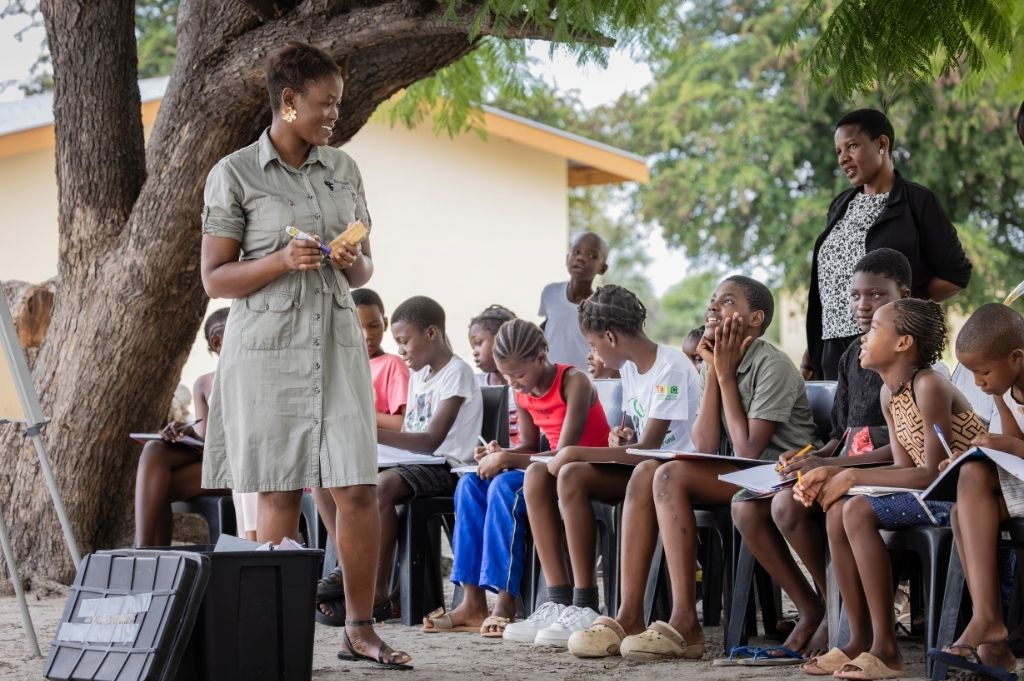
“When you see a small insect or animal, it may not be important to you, but it’s important to the ecosystem. If you find something, just let it be. The animal is supposed to be there, it has a purpose, even if you don’t know what that purpose is. If we kill that animal eventually it will go extinct, that means it is gone forever.”
Elephants for Africa, partly sponsored by Natural Selection Foundation, ran 38 environmental clubs in 2024 and 2025, reaching 210 students in 2024 and 253 students in 2025at Moreomaoto, Motopi, Khumaga and Phuduhudu.
Topics covered include tourism, maps and migration, food chains and trophic cascades, pollution, plant adaptation, and history of conservation.
That afternoon, the kids were learning about trophic cascades. Kemoneetswe played a short video on a big iPad about Yellowstone National Park in America, where wolves were reintroduced after being eradicated.
“Some animals kill other animals, but they also give life. If there are no lions, what will happen to the zebra population? If there are no lions, what will happen to the grasslands? And will happen to the vultures who feed on the zebras?”
After the lesson, the kids were split into groups, and asked to walk around the school playgrounds, looking for evidence of food webs and food chains. Ants, grass, chickens, trees, spiders, butterflies….anything that they could spot.
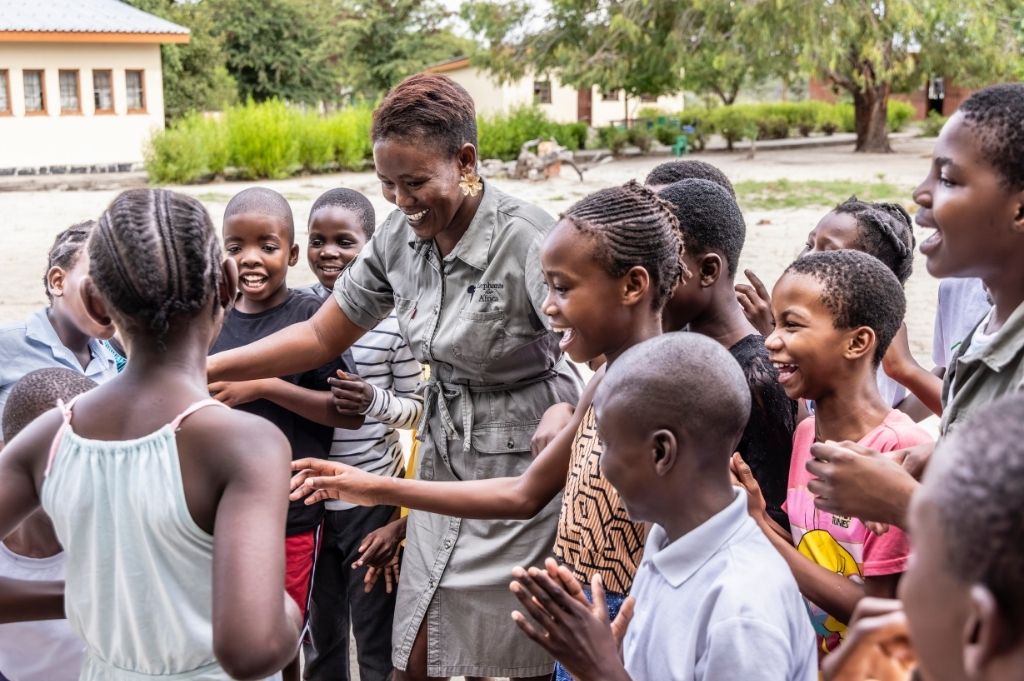
In the final activity of the afternoon, the kids were gathered in a circle, held hands, and Kemoneetswe got the kids to play along with her: “Habitat! Arms over your head. Food! Hands on your tummy. Water! Hands on your mouth.”
“All animals need these three things. Just like us,” Kemoneetswe explained to the kids. “Their habitat is important, their food is important, and their water is important. If we take all their habitat, food and water, then how will they survive? They want to survive, just like us.”
As Walona said to me afterwards, the environmental clubs play a big role in helping kids to achieve better marks in other subjects at school.
“This is not just propaganda. Kids are taught a holistic education about all of nature, and we see that kids who are in the EEC generally get better marks in other subjects at school too.”
In 2025, Elephants for Africa also began helping kids after school with extra tutoring. In the primary school leaving exams, the programme achieved a 74 per cent pass rate, compared to 39 per cent rate in 2024.
“The schoolteachers and parents of Moreomaoto have been very appreciative of this,” said Walona.
Sidebar – WildShots Outreach Program
Natural Selection also help sponsor a photography course that teaches local people in villages like Moreomaoto about wildlife photography, while also giving them a chance to photograph Africa’s iconic animals for themselves.
While I was at Meno A Kwena, I bumped into Karabo Magakane and Nathi Mdluli, two photographic instructors from South Africa, who travel to Maun, Khwai and Moreomaoto every year, to deliver a week long photographic course to about 10 people in each village.
“The core of the program is conservation,” Karabo tells me. “We are teaching them about conservation through photography.”
For the first few days, theory lessons are held in a classroom, with short sessions to learn how to use the different settings of the Canon cameras which are loaned to each student for the course.
“Students will say things like ‘we have always lived with elephants, but we don’t like them.’ So we hope that our program allows them to see wildlife in a new way. We hope that they can appreciate the animals as things of beauty, rather than something to chase away.”
On the last two days of the course, the students head out with a Meno A Kwena guide into Makgadikgadi Pans National park, where they are given the opportunity to practise their new skills in real time. Afterwards, their images are assessed and appraised by Karabo and Nathi.
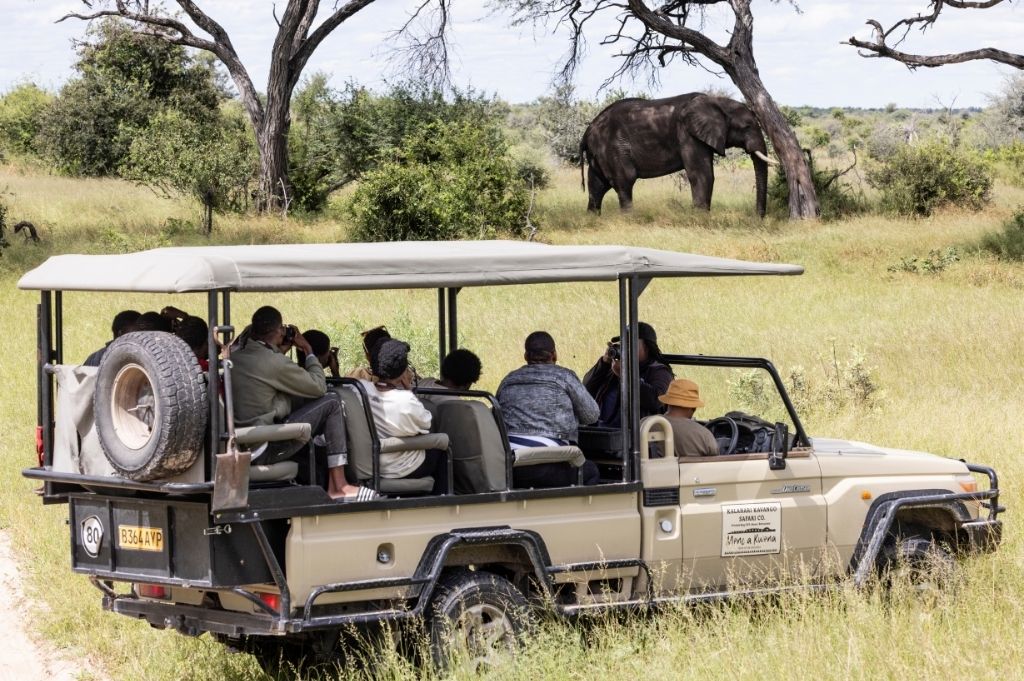
“We show them elephants in the park, because that’s one animal that they often see in the village. The elephant is usually stressed or scared, because it’s in the village, and so the people get scared too. So for them to photograph an elephant all relaxed and calm in the park, it changes their perception a little.”
“They can see that an elephant is not always a dangerous animal, that it can be relaxed when it’s around humans. We do see a shift in attitude by the end of the course. Students start to see animals in a new way.”
Author and Photographer: Scott Ramsay
Scott is the author of Spirit of Africa and South Africa’s Wildest Places.
CLICK HERE to learn more about Meno a Kwena camp.