
At Natural Selection, we believe the best safaris create unforgettable memories through meaningful connections. Guests visiting the new Hoanib Elephant Camp in northwest Namibia will have the opportunity to become part of the conservation story of one of Africa’s most extraordinary animals: the desert-adapted elephant.
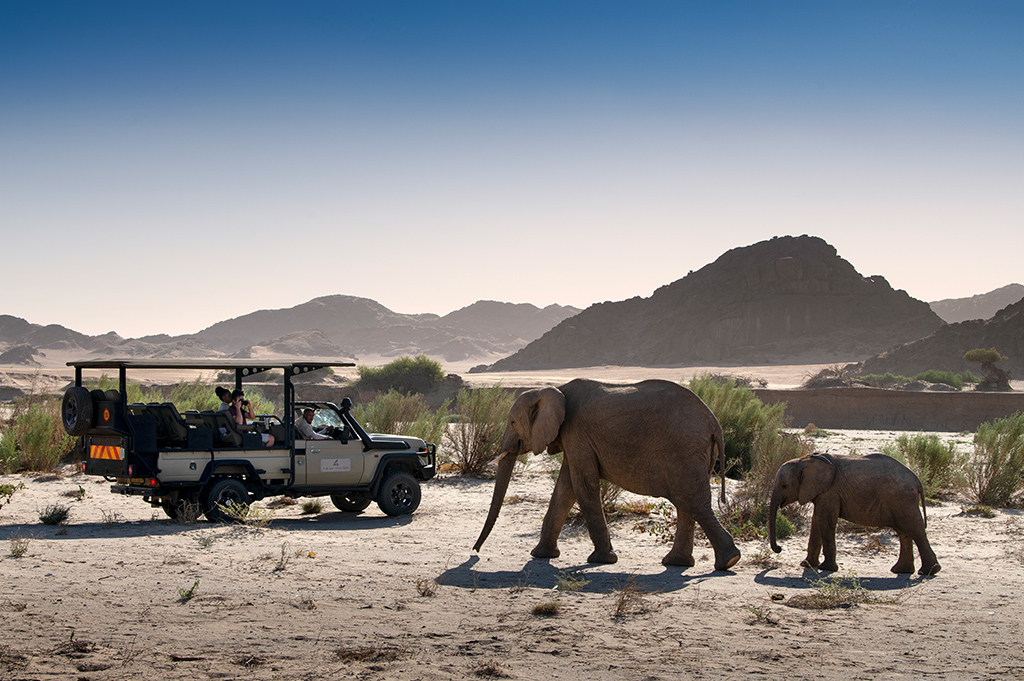
Natural Selection, in partnership with the Giraffe Conservation Foundation (GCF), has launched a new citizen science initiative that transforms routine wildlife sightings into valuable conservation data. During their regular game drives, guests can work alongside their guide to help photograph individual elephants, learn how to recognise them using unique physical features, and contribute observations that help build a long-term understanding of elephant movements, family dynamics, and social structure. Every sighting becomes more than a special encounter; it becomes a contribution to science.
At the centre of this programme are our guides. In late July, guides from Hoanib Elephant Camp came together for an intensive two-day training workshop. It was far more than a lesson in using new equipment, it was an opportunity to deepen their knowledge of the elephants they regularly encounter and strengthen their role as conservation ambassadors.
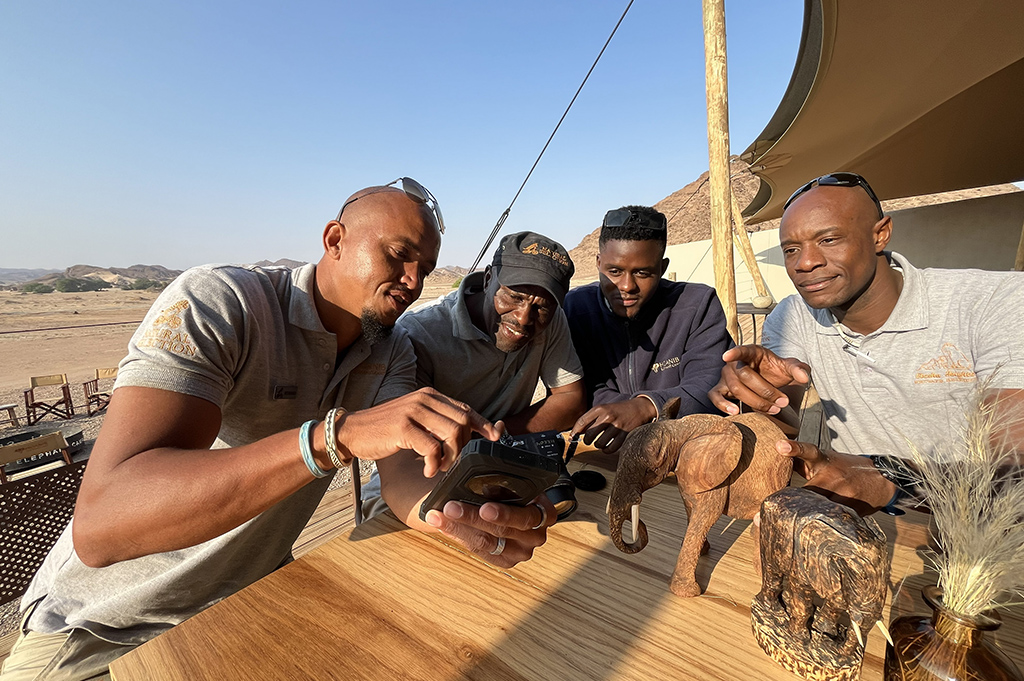
During the training, guides shared with each other how they identify the individual elephants of the Hoanib river. They practiced standardised photographic techniques using compact Kodak digital cameras, ensuring each image collected can be used for reliable individual identification. They were also trained to use rugged Blackview smartphones equipped with the EarthRanger app to accurately record GPS locations, identify elephants, document group composition, and log other field observations directly into a shared monitoring database. GCF provides ongoing scientific oversight and technical support for the programme, ensuring every observation collected by the guides meets rigorous research standards and contributes to a robust, long-term monitoring effort.
Perhaps the most important outcome of the workshop was empowering our guides to become the link between conservation science and our guests. They are the storytellers who translate years of observation and knowledge into engaging conversations around the campfire and in the field. They explain why one elephant family prefers a particular waterhole over another, how researchers recognize individuals by studying ear notches, tusk characteristics, and tail features and why every photograph and GPS point helps answer important conservation questions. By sharing this knowledge, our guides offer guests the chance to see elephants not simply as wildlife to admire, but as individuals with unique histories, families, and lives that are still being discovered.
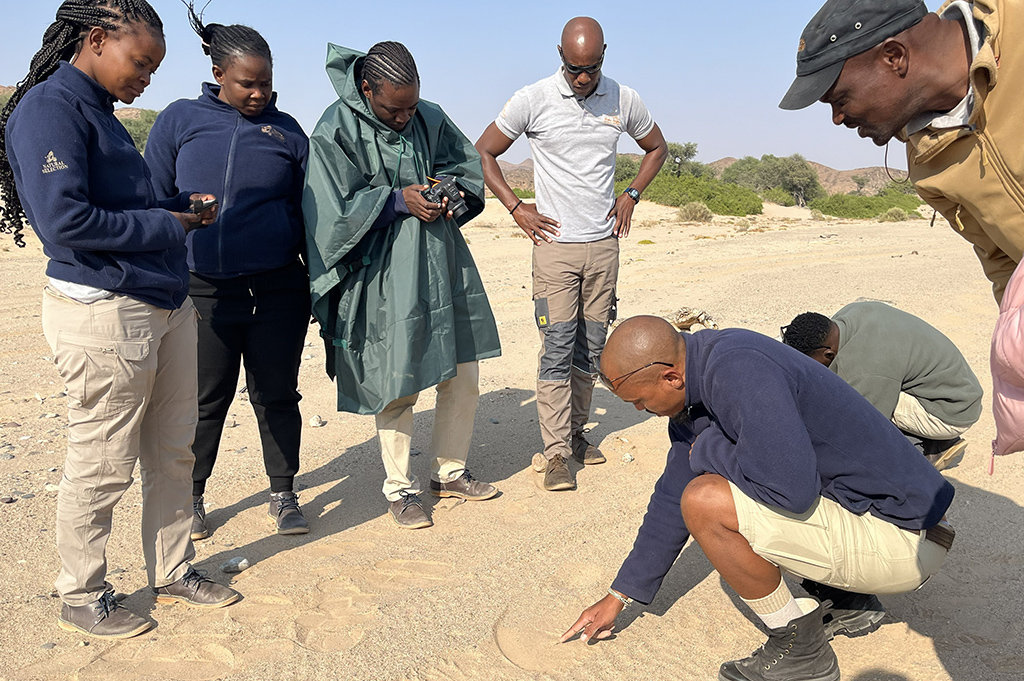
For guests who choose to participate, the experience adds a new dimension to their safari. Instead of simply watching elephants, they become active contributors to their conservation. Together with their guide, they help collect information that supports fine-scale monitoring of this unique desert population, improving our understanding of movement patterns, habitat use, social relationships, and population dynamics. These insights are essential for informing future conservation management in a rapidly changing landscape.
Collaboration lies at the heart of effective conservation. The information collected through this programme will support the ongoing work of Natural Selection and GCF while also being made available, upon request, to partner organizations and conservation authorities including IRDNC, the Ministry of Environment, Forestry and Tourism (MEFT), EHRA, Desert Elephant Conservation, and other approved researchers and conservation partners. By sharing knowledge across organizations, every game drive has the potential to contribute to the long-term protection of Namibia’s desert-adapted elephants.
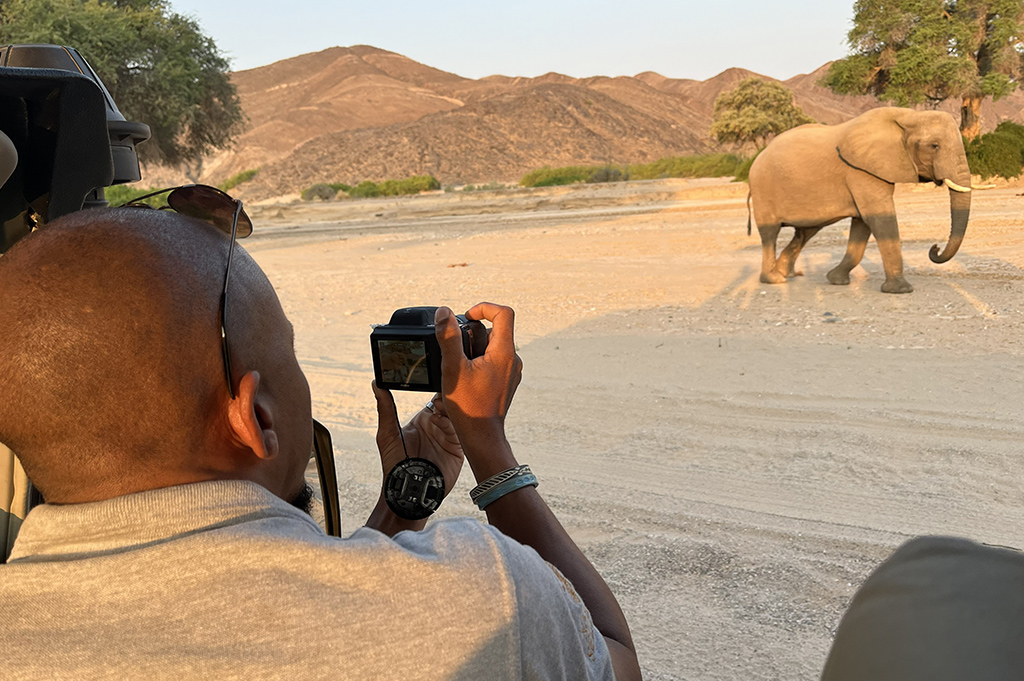
This initiative reflects what conservation tourism can achieve at its very best. It is not about asking guests to become researchers. It is about offering them the opportunity to engage more deeply with the landscape, the wildlife, and the people dedicated to protecting it. Through the passion and expertise of our guides, every safari becomes an invitation to leave a lasting conservation legacy.
CLICK HERE to view more on this project