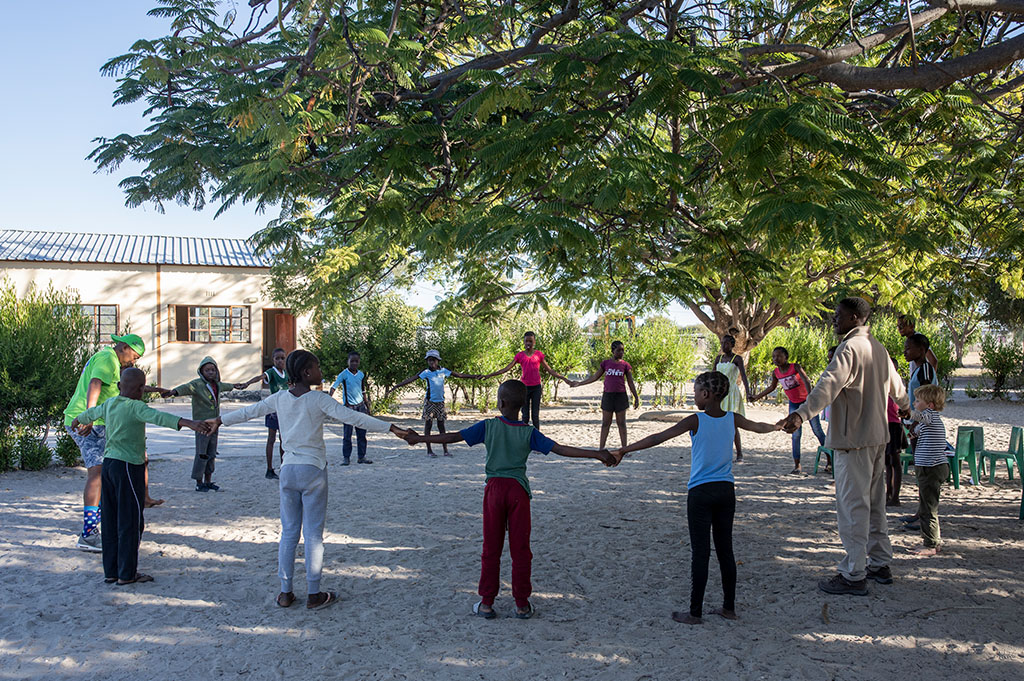
There was a time, not so long ago, when the word ‘Earth’ was associated with positive headlines, inspiring notions of nature, wilderness and the opportunity to reconnect with the world at large. Nowadays however, such headers carry stark warnings of climate change, lack of action and generations failing to take seriously enough their responsibility to the planet.
There is hope though. For every egotistical politician, there’s a glimmer in a child’s eye. For every adult swept up by the busyness of life, hoping someone else will take responsibility, there’s an earnest teenager who’s walked this wilderness since their first step. For those who dream of power and fame, there are others who simply want to preserve the world in its most natural and glorious state.
The philanthropic business model of Natural Selection which sees camps partner with and employ from local communities, also contributes 1.5% of every booking at our lodges directly to protecting wildlife, habitat and supporting communities who live alongside these wildlife areas.
This allows us to make a real difference through the Natural Selection Foundation, and one core area of work we support is in shaping the environmental stewards of tomorrow.
This is not something we undertake lightly, and all funds are managed by a board of experienced independent scientists, with our Co-Founder and Chief Impact Officer Dr Jennifer Lalley at the helm. Dr Lalley has spent her adult life immersed in Africa’s wilderness areas, studying and living them. Earth Day, which falls on 22nd April, felt an appropriate opportunity to ask her about the Foundation’s ambitions for the next generation and to speak to some of the young adults who are already shaping a positive environmental future having evolved through the projects we support.
“When we identify a need in an area, such as conservation education, we first look at what existing programs could meet that need,” shares Dr Lalley. “If there are none, we’ll implement a program ourselves. If there are effective existing programs, we invite them to expand into our area of operation or into the local community with whom we work. Conservation funds are scarce in the world, so we try to avoid wasting funds on reinventing the wheel or, worse, competing with programs that are doing excellent work already. And how do we determine if the work is good? We look at the history of the program, verifiable reports and evaluations and the organization’s reputation with local people.”
Since the launch of Natural Selection in 2016, 12,000 students have participated in our conservation education initiatives. We believe that supporting conservation education is one of most effective ways to foster long term co-existence between people and wildlife.
“The goal of providing conservation education is to build wildlife and environmental stewards for the future, while also addressing the more immediate conflicts that arise from living in areas with wildlife,” confides our Chief Impact Officer. “When there’s human-wildlife conflict without conservation education, one sees only the human side of the story and wildlife will lose out time and time again.”
By investing in education at a local level, we help build informed, resilient communities with the knowledge and confidence to protect the landscapes they call home. There are five NGOs we work alongside in inspiring children to be the conservation and environmental leaders of tomorrow: Lessons in Conservation (LiC), Coaching Conservation, Elephants for Africa (EFA) Conservation Education, Khomas Environmental Education Programme (KEEP) and Wild Shots Outreach.
“Each of these Conservation Education programs achieves something unique,” notes Jennifer. “Lessons in Conservation (LiC) offers more intense, focused workshops with a select number of children, building ambassadors for wildlife. It works extremely well alongside some of our other funded programs by enabling a select group of children to have repeated exposure to wildlife conservation information throughout the year through the various programs.”
LiC is a youth-led organisation that strives to educate young children in rural African communities with the hope and belief that this generation will grow to love and accept conservation and the natural world and share all they’ve learnt with families and peers. Through hands-on learning and real-world wildlife experiences, LiC equips participants with essential ecological knowledge and a strong sense of environmental responsibility. To date, we have supported LiC initiatives with students in Botswana’s Khwai and Moreomaoto villages, as well as with students from Elias Amxab School in Namibia.
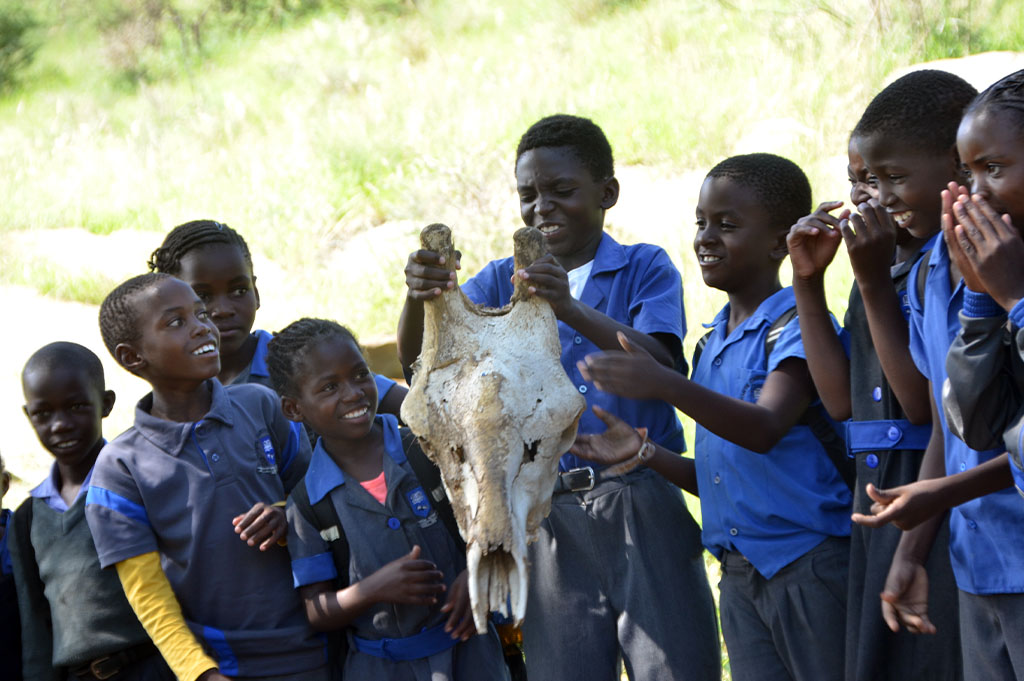
“Our lessons are designed to ignite a spark in young learners,” explains founder and CEO Dean Carlisle. “This ignition comes in the form of fun, interactive sessions in which games, activities, and demonstrations bring important ecological concepts to life. However, this spark runs the risk of fading as children grow older and face competing priorities. To address this, we have created a student journey cycle that demonstrates a pathway from primary school all the way to employment in the conservation space. This is our theory of change: Raising awareness → Deepening nature connection → Building skills → Practising skills → Gaining experience → Launching careers”
One particularly notable graduate from LiC is Phiwokuhle Masimula who the team first met as a student. “He immediately stood out as a person of integrity, passion and focus.” The team interviewed Phiwo and asked him to manage a university team they were setting up. “During this time, Phiwo worked long hours each day without earning anything. His friends and family did not understand his commitment to Lessons in Conservation, but he persisted and has been rewarded over time. Last year, we were finally able to help make Phiwo’s dream of becoming an environmental educator and field guide a reality when we secured a bursary to send him on a two-month guide training course in South Africa. We also invited him to the first tracking workshop we ran with the Khwai Rangers in the Khwai Private Reserve, and he relished the opportunity to learn from them.
Today, Phiwo is a qualified guide, a director, and the National Manager of Lessons in Conservation Eswatini. He and his team have delivered lessons to well over 2,500 children across several regions in Eswatini. He is fostering a love and understanding of nature for the next generation, and we could not be prouder of all he has achieved.”
Coaching Conservation (CC) follows a similar thread but with sport at its core. This conservation outreach program for children fosters self-respect, respect for others and respect for wildlife and the environment. By linking conservation to shared values through play of fun, active games, the program helps children form a personal connection to the environment and understand their own role in protecting it.
Patience Isaaca has moved through the Coaching Conservation program, from volunteer to trainer and is now facilitator of the CC program in Botswana. She sat down to share her story with us, and her feelings about the work’s impact.
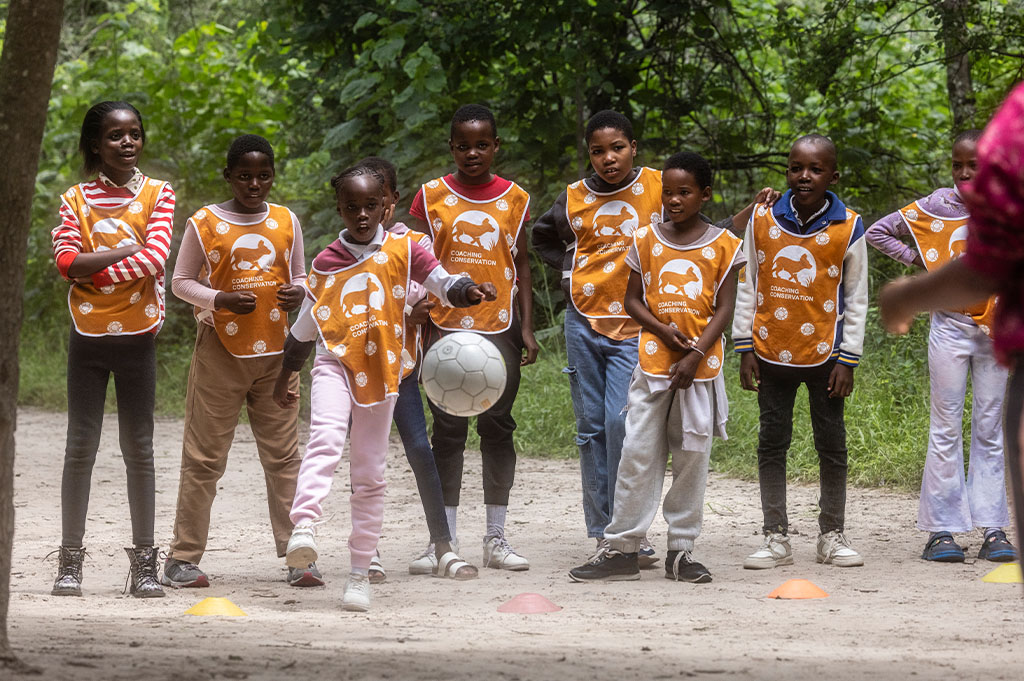
“I first joined Coaching Conservation as a volunteer in January 2023 – a time when I was searching for direction and purpose. I didn’t realise then that stepping into Wild Entrust office would end up shaping not only my career, but the way I see the world. I remember at the beginning watching children speak about wildlife with fear or frustration, stories shaped by crop loss, livestock predation, or simply growing up in spaces where survival and nature are closely intertwined. But over time, something shifts. Through games, conversations, and shared experiences, you begin to see curiosity replace fear, and pride take the place of resentment.
One story that has stayed with me is of a young girl from Khwai village, who was initially very quiet and hesitant to participate, especially during the game drive. Her fear was undeniable. Whenever the guide stopped near an elephant sighting, she would tremble, covering her face with her hands and begging us to move away. Her fear was deeply rooted—she had a relative who had been injured by an elephant. To her, elephants were only a source of danger: animals that destroyed trees, threatened livelihoods, and made it unsafe to walk long distances, even to school.
During the BushRAP program, we came across a weak and sick baby elephant that, at first glance, appeared lifeless. She was the first to notice it. Instead of fear, she was overcome with concern, begging us not to leave it behind and insisting it be taken somewhere safe to be helped. That moment marked a powerful shift. The empathy she showed was real and profound.
Through the sessions, she started to understand elephant behaviour, migration, and the underlying causes of human-wildlife conflict. From then on, she slowly began to open up. By the end of the program, she stood in front of her classmates and spoke confidently about the importance of protecting elephants and finding ways for people and wildlife to coexist.
What struck me most was not just her confidence, but her transformation, she had moved from fear to understanding, and from understanding to advocacy. The baby elephant was later rescued by Elephant Havens and today is healthy and thriving, a quiet but powerful reminder of what care, compassion, and a shift in perspective can do.
For me, this journey has been deeply personal. Coaching Conservation didn’t just teach me how to educate others, it helped me find my own voice and purpose within conservation. It showed me that meaningful change doesn’t start in policies or protected areas alone, but in the hearts and minds of young people who will one day make decisions for their communities and their environment.”
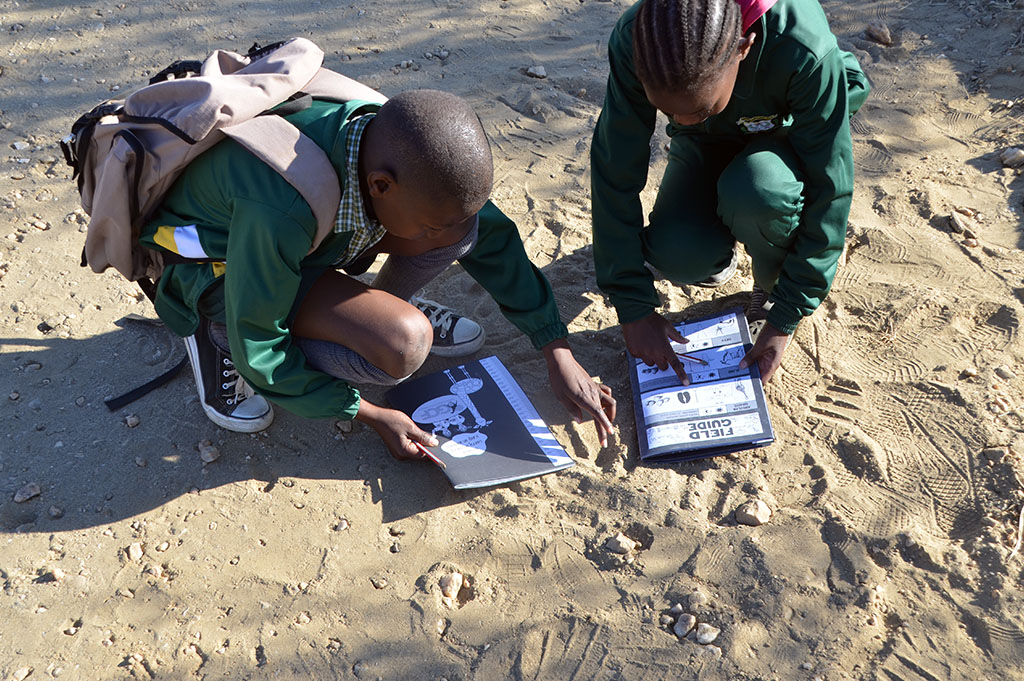
Namibia too has work happening to inspire future planet custodians. The Giraffe Conservation Foundation’s Khomas Environmental Education Program (KEEP) works with urban primary schools in under-resourced areas, fostering a meaningful connection to nature and encouraging long-term environmental awareness and responsibility. Integrated into the national curriculum, the program combines classroom learning with hands-on experiences in Namibia’s bush, helping young learners translate curiosity into conservation awareness and action.
“Our school has been participating in the KEEP program for many years, and it has significantly shaped the environmental consciousness of many of our learners,” shares Kalinasho Shonena, teacher and club coordinator at Otjomuise Primary School. “This program provides a truly transformative experience that sparks a lasting commitment to protecting the environment.”
By grounding education in real-world experiences, KEEP inspires young minds to value and protect the natural environment beyond the classroom.
“In Botswana and Namibia two programs that reach the most children are Coaching Conservation and KEEP,” relates our CIO. “They run scalable programs that can reach large groups of children at the same time.”
Over in one of Botswana’s highest human-wildlife conflict zones meanwhile, Elephants for Africa (EFA) work with communities near Meno a Kwena and the fringes of Makgadikgadi National Park to run a monthly Environmental Club.
“In the Makgadikgadi / Boteti region of Botswana, where we run the large mammal migration program, Elephants for Africa help us educate children in Moreomaoto Village,” Dr Lalley tells us. “This community has undergone a tremendous change in its exposure to large mammals in the last 20 years due to the resurgence of the migration after decades of dormancy. Together with a guide from Meno a Kwena, EFA have a monthly environmental club meeting with children in the village to learn about wildlife and how to live harmoniously with it. The program runs congruently with workshops provided to farmers in the same village.”
EFA’s Community Projects Manager Walona Sehularo has certainly seen the difference the work has made and continues to make. “One of the subtler but most meaningful shifts I’ve noticed is in what students say they want to be when they grow up. Where you once heard the usual answers; soldier, teacher, nurse. You now hear things like wildlife guide or conservation researcher. To me, that’s significant. It tells me their horizons have expanded beyond the jobs they see every day, to include futures where caring for the environment is central to who they are.”
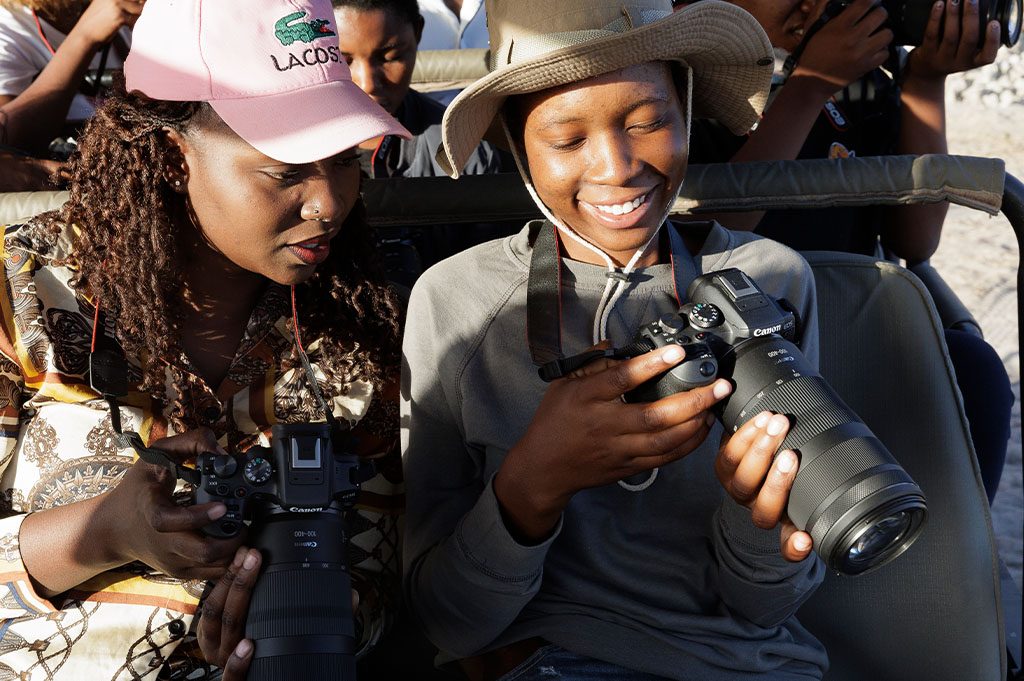
Then there’s Wild Shots Outreach which reframes conservation education. This award-winning NPO offers an immersive experience through which young adults from disadvantaged communities are introduced to wildlife and wild places via the lens of a camera. This experience facilitates conversations around conversation, shaping mindsets in the process. We work closely with Wild Shots Outreach hosting workshops each year at a selection of our camps. The program engages unemployed youth, using photography as a gateway to understanding nature and conservation. Program Director Rifumo Mathebula, who came through the program himself, has been internationally recognised for his work and received the CIWEM Youth Environmentalist of the Year and Mail & Guardian Greener Futures awards, recognising individuals creating meaningful and lasting environmental change. Today Rifumo is somewhat of a hero to the youngsters who participate in Wild Shots Outreach, many of whom come away with freshly nourished dreams of a life in conservation.
“This experience made me fall in love with nature,” grins Elsi Fredricks who recently completed the program. “It made me realise that my dream to be a field guide can come true. All thanks to the opportunity I grabbed with both hands, and I hope more youths get the opportunity to learn what I learnt.”
While communities close to wilderness areas are impeccably placed to protect them, we need global action too. Every time a child or teenager comes through the Natural Selection lodges a transformation takes place and priorities shift. Their interests back home remain of course, but their sense of self grows as they begin to understand their place in the wider world and the gravity of it.
“We drove through the bush past zebras, jackal and buck; suddenly, there was nothing, no more bush, no more animals to be seen. Only salt pans stretching as far as the eye could see. We then stopped in a place that we call African silence. The only sounds we could hear were our breathing and our footsteps crunching the salt beneath us. As we stepped, we found spear heads lying on the salt pans that could be 500 years old or 25,000 years old,” recalls Meg, who visited the Makgadikgadi camps at the age of 15 with her family, and found herself profoundly moved by the experience. “We all separated and we walked across this ancient land, untouched by humans for centuries. I was in my true happy place, a place with not a stress in the world, just pure silence.”
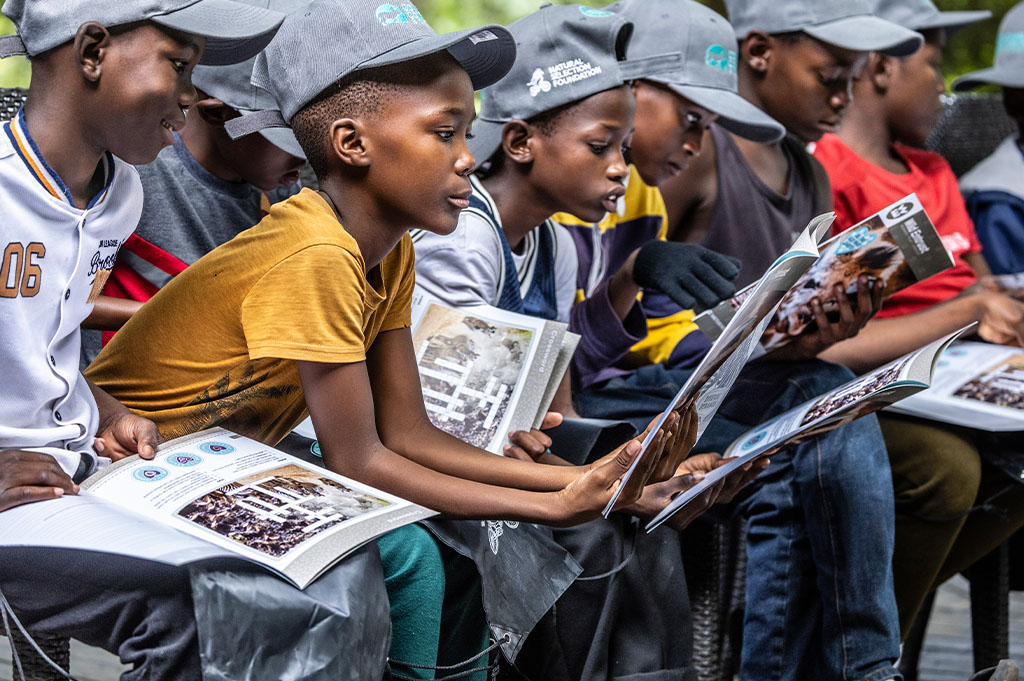
Youngsters travelling through Botswana are equipped with engaging packs from the Coaching Conservation program that includes an activity book and cap. We hope that time in the wild will spark the beginning of a long-term relationship with nature and care for the wilderness.
“The future of wildlife areas lies in the hands of the next generation – this is certainly not a new realization, but one that often slips off the radar because day to day conservation crises often take precedence,” Jennifer explains. “People are integral to environmental health and environmental health is absolutely key to sustainable development in these rural areas. These education programs help develop an awareness that we’re all connected to nature and that we have a responsibility to ourselves, our neighbours and the wildlife around us.”
These kids hold the future in their hands, and will in time, see positive headlines written once again.
To view more about our Conservation Education Programmes click HERE