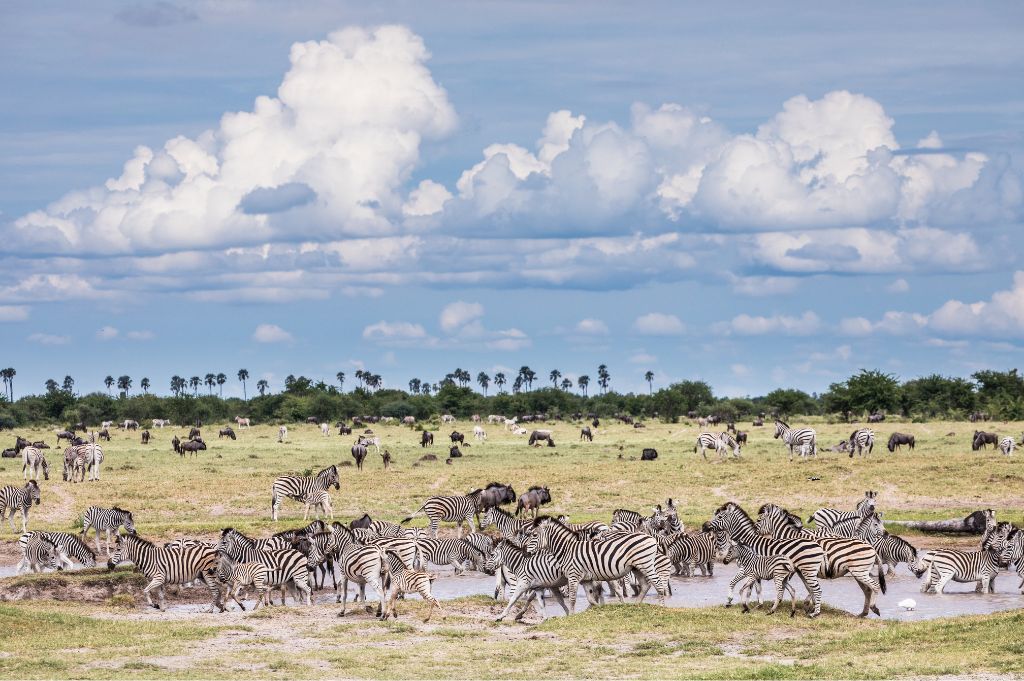
Each year, between December and March, Botswana’s vast and seemingly desolate Makgadikgadi Pans come alive with one of nature’s most extraordinary spectacles: tens of thousands of zebras, so densely packed that their stripes merge into a single, moving tapestry. This is Africa’s longest terrestrial migration, stretching across northern Botswana, a journey followed for countless generations by zebras and wildebeest.
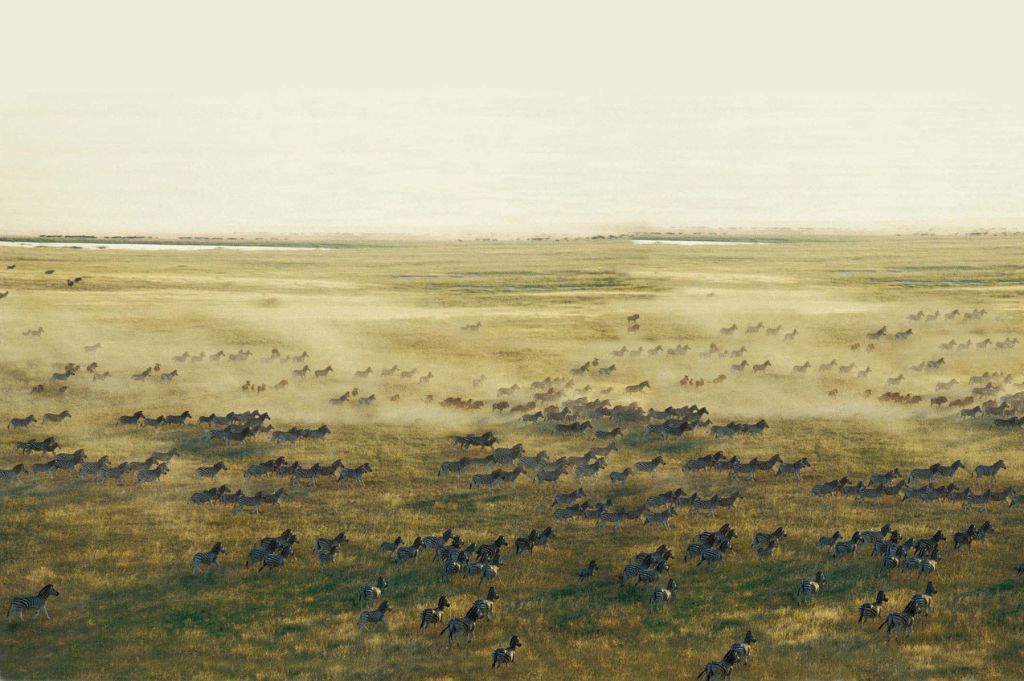
But this iconic migration nearly vanished. In the 1960s, changes in land use led to fencing across these historic routes, halting the animals’ ancestral journeys. “I haven’t seen scientific data, but anecdotal evidence suggests that before the vet fences, this migration was as large—if not larger—than the Serengeti, which hosts over a million wildebeest and 300,000 zebra,” says Dennis Sizemore of Escudilla. Records from 1975 describe single wildebeest herds of over 100,000 in the central Kalahari.
Despite these obstacles, the animals’ instincts have endured. Over the past 10–15 years, driven by necessity and ancient knowledge, zebras and wildebeest have begun reclaiming their migration routes, breaking through old fences and small-hold farms. This revival not only reconnects zebras with vital water and mineral-rich grazing areas but also expands the range of elephants, easing pressure on overused habitats. The nutrient-rich grasses along the edges of the pans provide sustenance that rivals their historical feeding grounds.
For conservationists, the re-emergence of this migration is captivating. Many of the animals now migrating had never followed the route before. “Some scientists think zebras have a genetic memory of these paths; others say it’s their ability to sense rain and water,” notes Dennis. “It doesn’t really matter, as long as they’re moving again.” Increasingly, elephants are joining the trek, with both resident bachelor herds and migrating breeding herds now using these corridors.
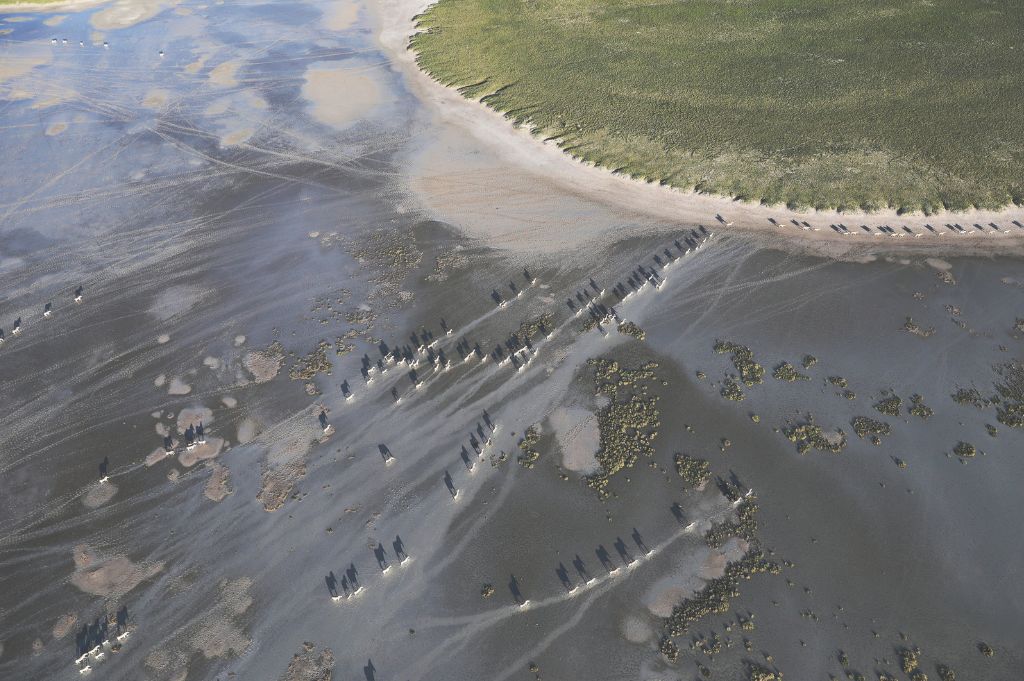
The Natural Selection Foundation has been at the forefront of supporting this restoration. By collaborating with local communities and partner organizations, we study wildlife movement, identify conflict zones, and educate villagers and farmers who have no living memory of the historic migration. Our goal is to remove barriers—roads, towns, fences, and negative perceptions—to create landscapes that benefit both wildlife and people.
While the program focuses on Makgadikgadi National Park and surrounding areas, the broader vision spans northern Botswana. “From Chobe and the Okavango to the Pans, and from Hwange in northwest Zimbabwe to the Delta, animals are constantly on the move,” Dennis explains. “A key long-term goal is reconnecting this migration to the Central Kalahari Game Reserve. It will be challenging due to numerous communal and commercial farms, but it’s vital for the ecological health of the region.”
Visitors can witness the impact of this conservation work firsthand. Meno a Kwena’s clifftop position overlooking the Boteti River offers some of the best vantage points from April to September, as thousands of zebras converge to drink. The sight and sound—a ceaseless symphony of whistles and calls—often takes visitors by surprise, creating a seasonal soundtrack uniquely tied to this remote camp.
The Makgadikgadi Pans also provide remarkable wildlife encounters at Jack’s Camp, San Camp, and Camp Kalahari, where guests can watch zebra and wildebeest parading across the flat, shimmering landscape between December and March. Many who experience this wonder are inspired to support the conservation initiatives that make it possible.
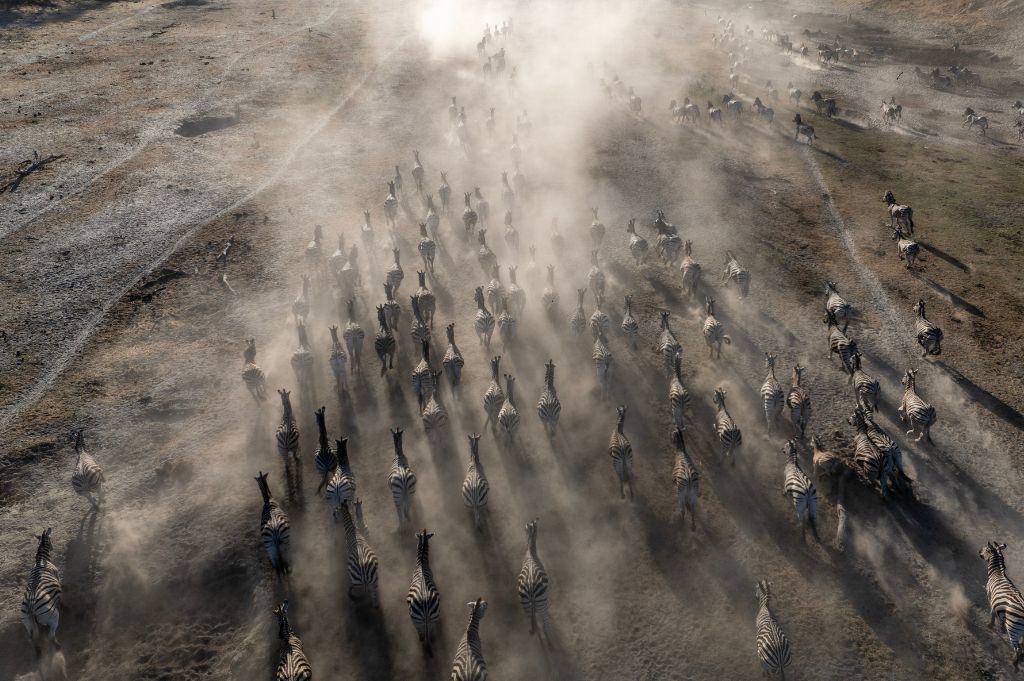
On-the-ground work is multifaceted. Local communities and stakeholders are essential to sustaining these migrations. Donors enhance Natural Selection’s efforts by funding camera traps for waterhole monitoring (USD $550 per trap), lab fees for water quality and herbivore movement studies led by PhD student Delphine Dubray, workshops for farmers (from $200 USD), and GIS mapping projects ($5,000 USD).
Initiatives like this create a conservation landscape where humans and wildlife coexist, turning annual species events from warnings into celebrations. Witnessing the migration in person reveals the extraordinary impact of donations and dedicated conservation efforts—every animal represents a success story.
Support the restoration of these iconic migration routes by visiting Natural Selection Foundation – Makgadikgadi Initiative or emailing [email protected].