DESERT-ADAPTED BLACK RHINO RELOCATION | NORTHWEST NAMIBIA
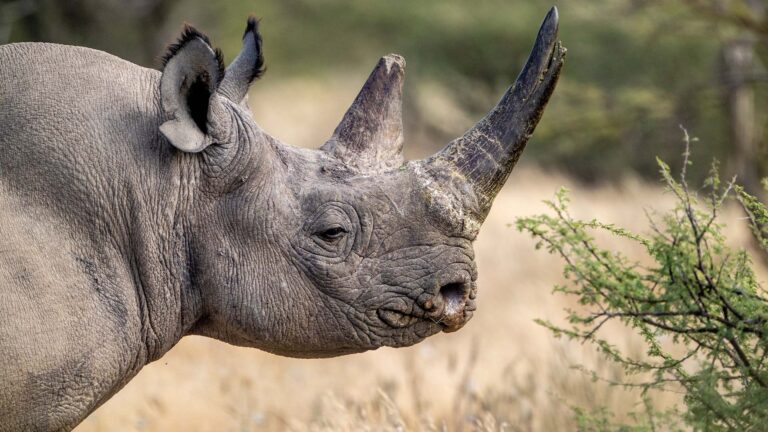
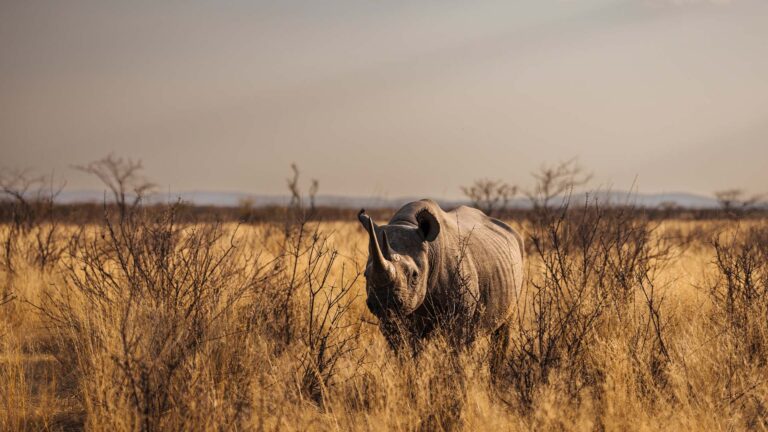
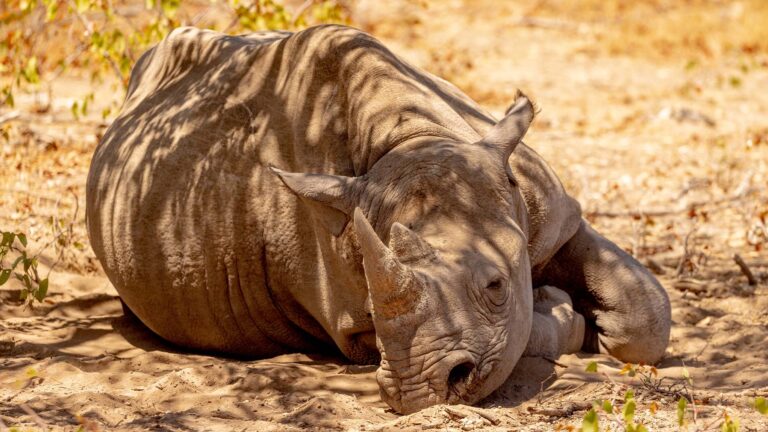
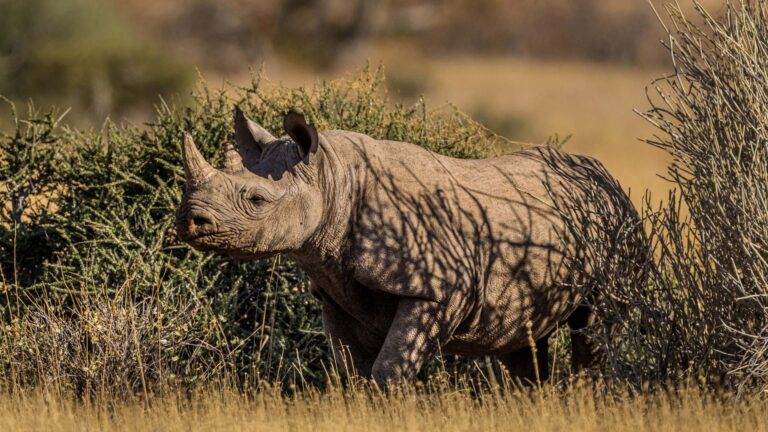
Northwest Namibia is home to the largest remaining free-ranging population of desert-adapted black rhino—an extraordinary conservation success in one of Africa’s most unforgiving landscapes. These rhinos range vast, arid territories, making their protection complex and their survival dependent on long-term, coordinated conservation effort.
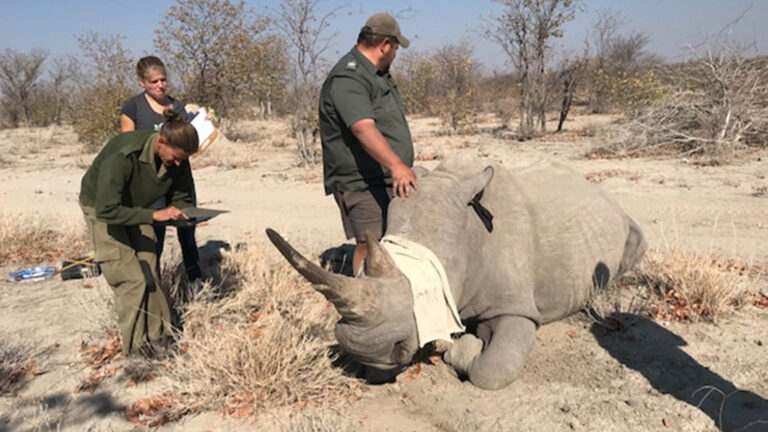
Natural Selection supports a black rhino range expansion and relocation programme in Namibia’s rugged Kunene Region, focused on strengthening population resilience by relocating selected females to suitable, secure habitats. These rhinos remain fully free-ranging, requiring sustained monitoring, surveillance and protection over immense landscapes.
This work is undertaken in partnership with Save the Rhino Trust, a long-standing leader in desert-adapted black rhino protection. Natural Selection’s ecotourism partnership with SRT, established in 2003, supports long-term monitoring and conservation in the region.
ANTI-POACHING SUPPORT | ETOSHA HEIGHTS
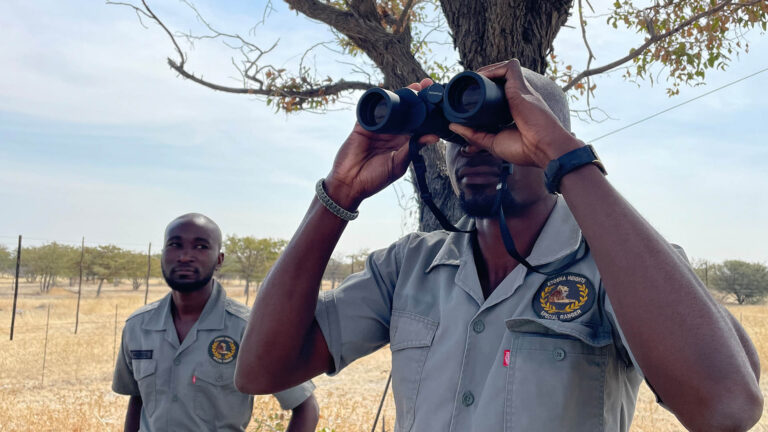
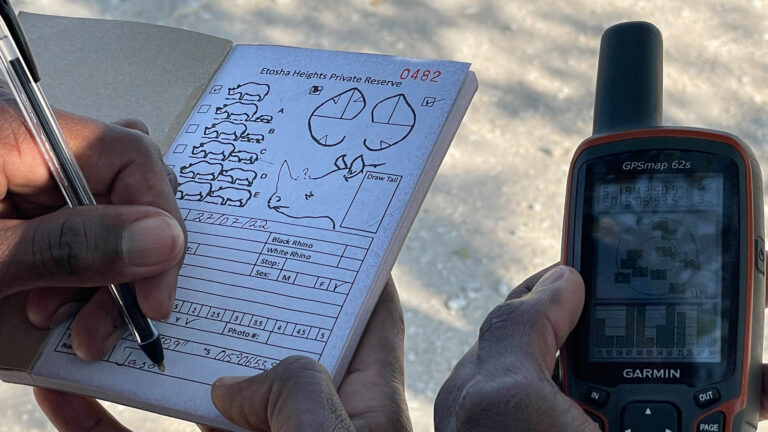
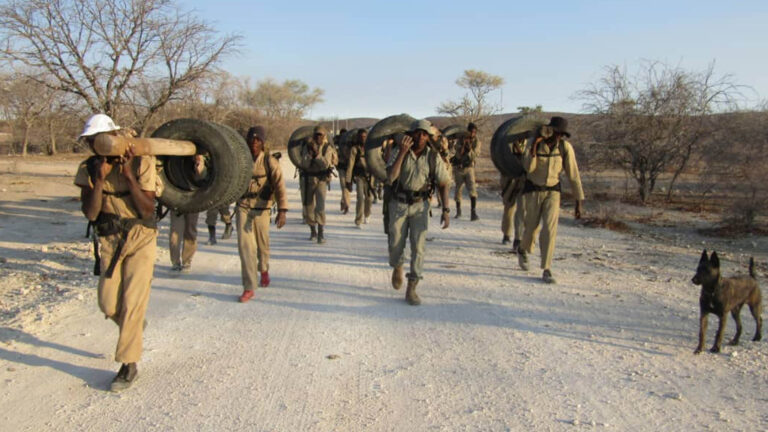
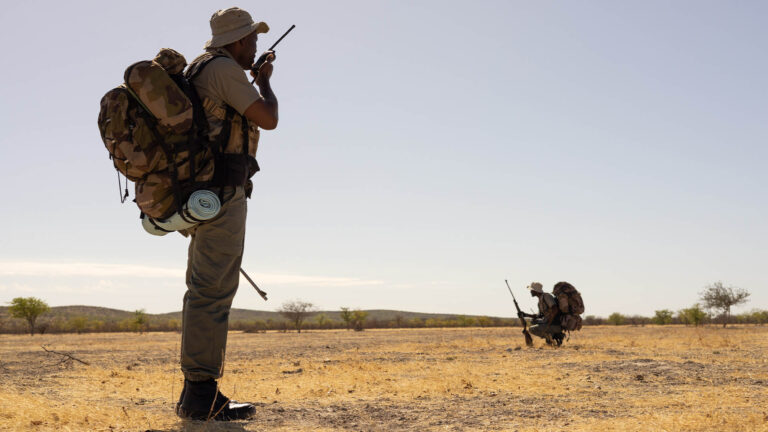
At Etosha Heights Private Reserve, anti-poaching rangers operate 24 hours a day, responding to a persistent and evolving threat. Rangers are equipped with thermal imaging, night-vision equipment, surveillance cameras, drones, satellite communication and wildlife monitoring software. Ongoing training and regular equipment upgrades are essential to maintaining effective protection.
This frontline protection is funded through Natural Selection’s 1.5% conservation donation from every booking, the Conservation, Community & Reserve (CCR) fee paid by each guest, and the generosity of committed partners and visitors. Together, these contributions directly sustain the people and tools that stand between rhinos and extinction.
Long-term rhino conservation requires evidence-based protection, monitoring and population management. Integrated anti-poaching and relocation initiatives play a critical role in reducing immediate threats and strengthening the resilience of free-ranging rhino populations.