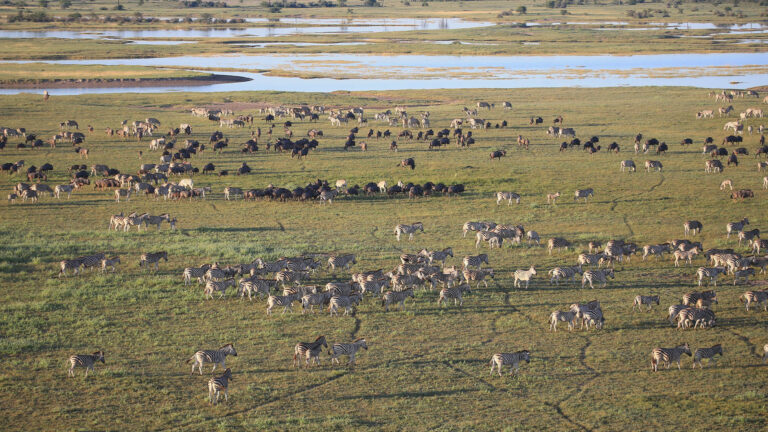
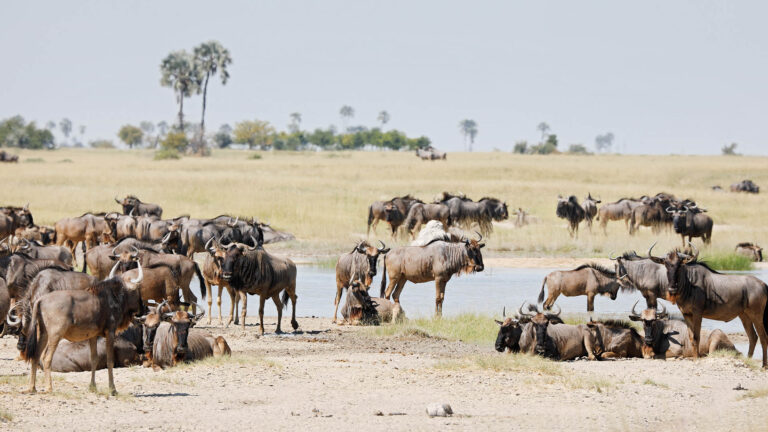
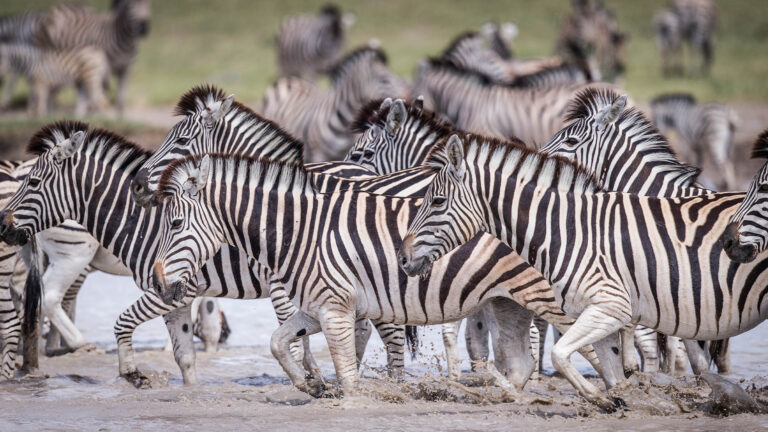
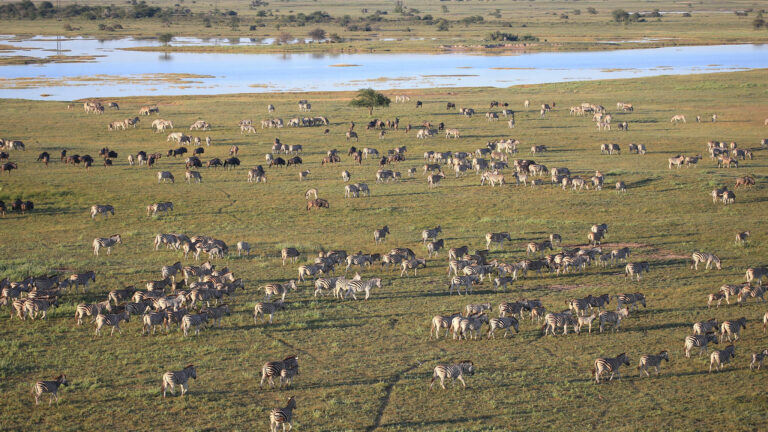
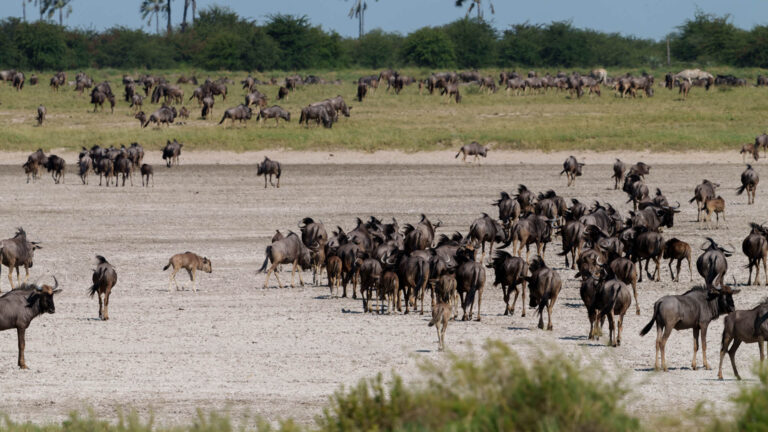
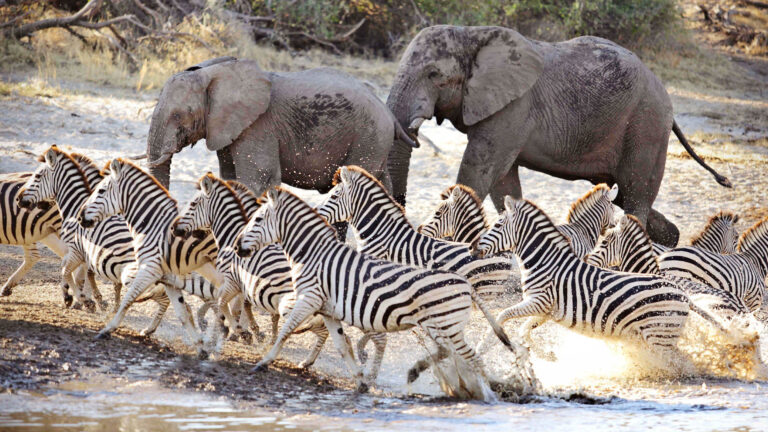
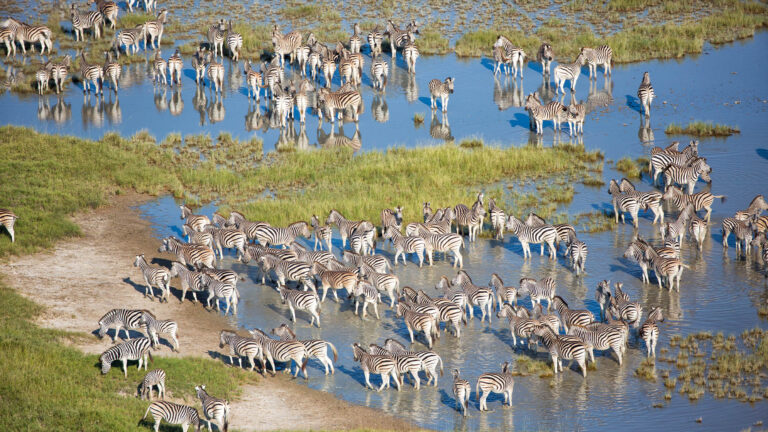
Before the 1960s, the area of north-eastern Botswana around the Makgadikgadi National Park and the Kalahari Desert held the longest and possibly the largest migration of zebra and wildebeest in Africa. It was, however, abruptly cut short by land use changes requiring extensive fencing. Amazingly, the migration has re-emerged over the last decade, pushing through old fences and small-hold farms.
Natural Selection was founded just as this resurgence was taking hold, making the migration a core focus from the beginning. Our work addresses the challenges it faces through a multi-faceted conservation program: researching land use and resources to reduce human–wildlife conflict, collaborating on informed land-use planning, strategically managing water points to limit overgrazing, and supporting local communities with tools for coexistence.
Today, our Makgadikgadi properties are renowned for the annual migration they host. What remains largely unseen is the extensive work behind it—tracking wildlife and cattle movements, studying waterhole use, mapping conflict zones, and implementing mitigation strategies. Together, these efforts aim to remove barriers to movement and enable this extraordinary migration to flourish.
Impacts of Surface Water on Herbivore Ecology
As climate change intensifies conditions across this already extreme landscape, research has become more urgent than ever. Our Impacts of Surface Water on Herbivore Ecology and Socio-Ecological Knock-on Effects Project examines how water availability shapes large herbivore behaviour and, in turn, affects vegetation, landscape connectivity, and human–elephant conflict. By understanding these cascading effects, we’re better positioned to implement meaningful, adaptive on the ground solutions where they matter most.