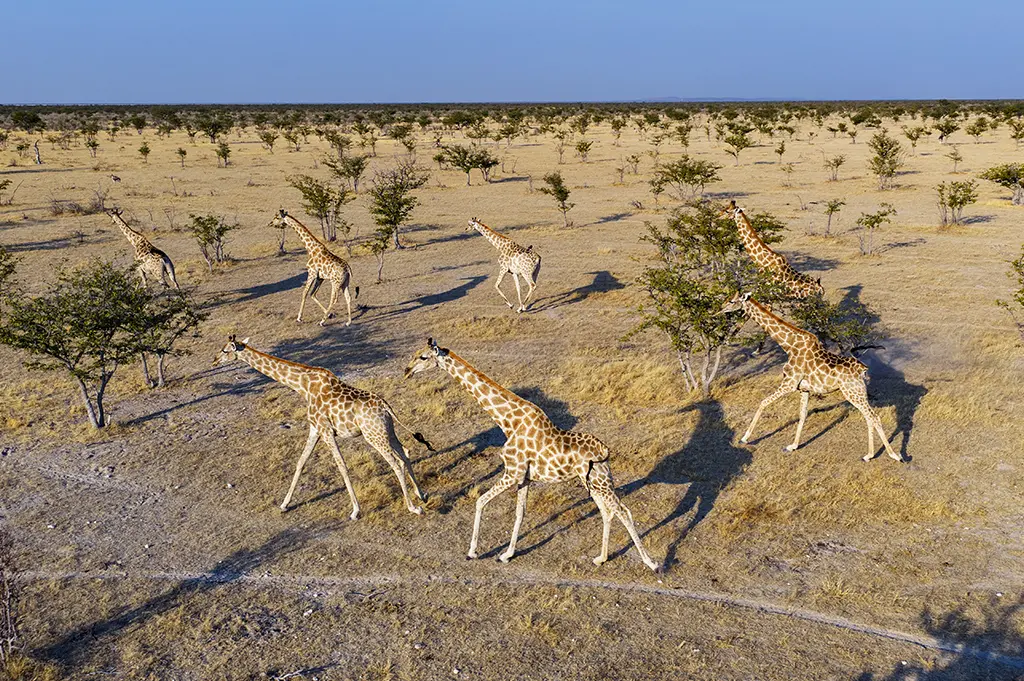
Not so long ago, Etosha Heights Private Reserve in northern Namibia told a very different story. What is now a thriving conservation landscape was once a fragmented mosaic of cattle ranches and hunting blocks, cut apart by fences and valued largely for extraction rather than protection.
Today, the transformation is unmistakable. Boundary fences have been removed, degraded habitats are recovering, and the sounds of the bush have returned — from the deep rumble of elephants to the quiet passage of antelope across open plains. Etosha Heights is no longer simply a reserve; it stands as a powerful example of what committed eco-tourism and long-term conservation investment can achieve. We’re proud to support its ongoing restoration and growth.
Natural Selection Travel began partnering with Etosha Heights in 2017, united by a shared vision: to rebuild this landscape as a connected wildlife refuge that safeguards biodiversity at scale. Years on, the results are tangible — wildlife is returning, ecosystems are healing, and the reserve is once again fulfilling its natural role.
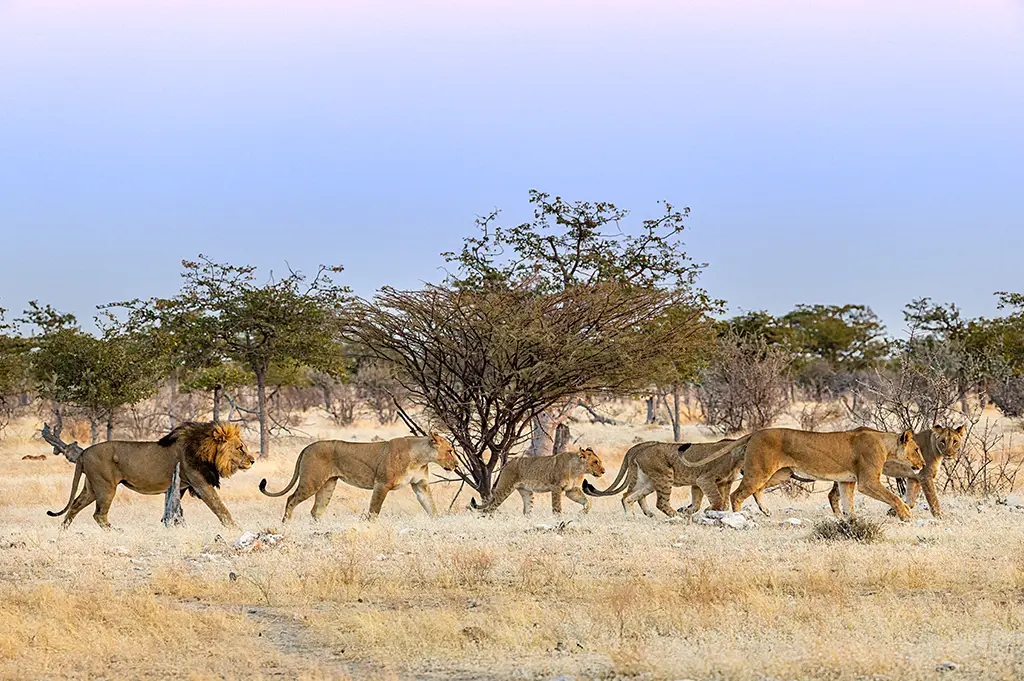
Spanning 65,000 hectares, Etosha Heights Private Reserve plays a vital role as a protective buffer along the southern boundary of Etosha National Park — Namibia’s most iconic protected area. Today, this land functions as part of a vast, interconnected ecosystem of more than two million hectares, allowing wildlife to move freely across an expansive, restored wilderness. The result is exceptional biodiversity and consistently rewarding game viewing, offering guests the essence of Etosha’s wildlife spectacle without the pressure of crowds.
This transformation marks a true wildlife renaissance. Over the past five years, both species diversity and wildlife densities have increased markedly, elevating the quality of wildlife encounters throughout the reserve. Since 2017, bi-annual wildlife counts have recorded healthy and growing populations of threatened and endangered species, including black and white rhino, more than 270 elephants — a species that previously did not utilise the reserve — around 100 locally endemic black-faced impala, 80 sable antelope, approximately 370 giraffe, and more than 30 lion. Etosha Heights also supports critical roosting and breeding habitat for two of Namibia’s vulnerable vulture species: the white-backed and lappet-faced vultures. It is a landscape of exceptional conservation value.
Conservation success at this scale does not happen in isolation. It is built through collaboration, shared vision, and long-term commitment. Etosha Heights has emerged as a model for collaborative conservation, with the Natural Selection Foundation working alongside multiple partners to deliver initiatives whose impact extends well beyond the reserve’s boundaries. Some of these include:
Rhino Protection & Anti-Poaching
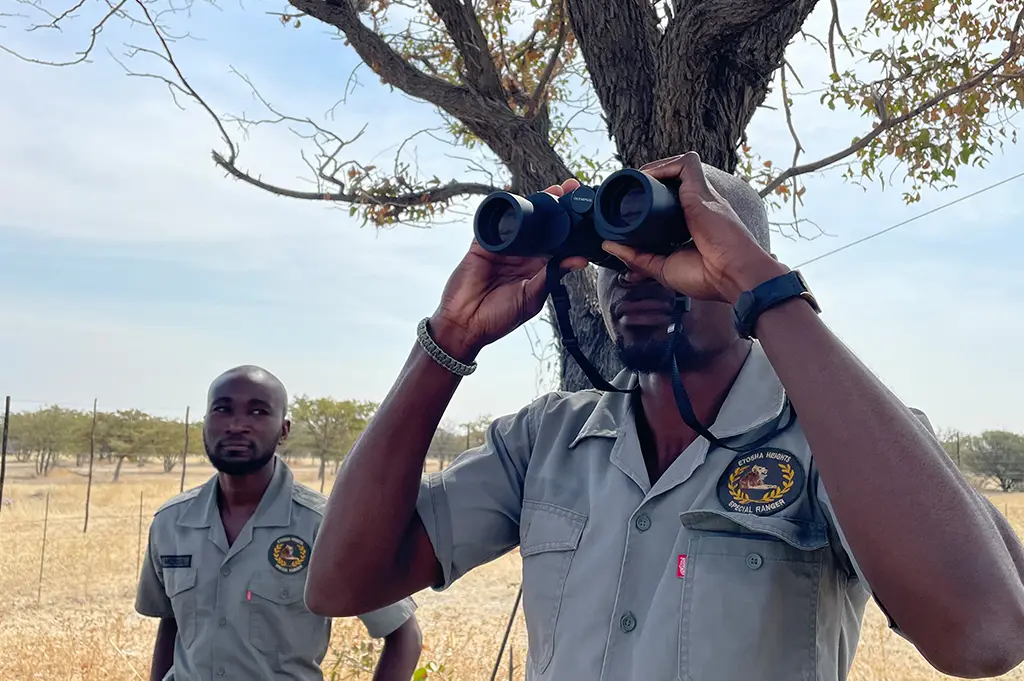
Etosha Heights is a designated Black Rhino Custodian area, and with both black and white rhinos moving freely across the reserve, their protection is a top priority. A dedicated, round-the-clock anti-poaching unit operates on the ground, supported by camera surveillance networks and advanced monitoring technology to safeguard these critically important animals.
Natural Selection actively supports these protection efforts through its 1.5% conservation contribution and CCR Fee. This funding directly underwrites ranger training, the construction of surveillance towers, and the deployment of aerial patrols — including gyrocopter support — ensuring that rhino conservation at Etosha Heights is proactive, well-resourced, and resilient.
Science & Education
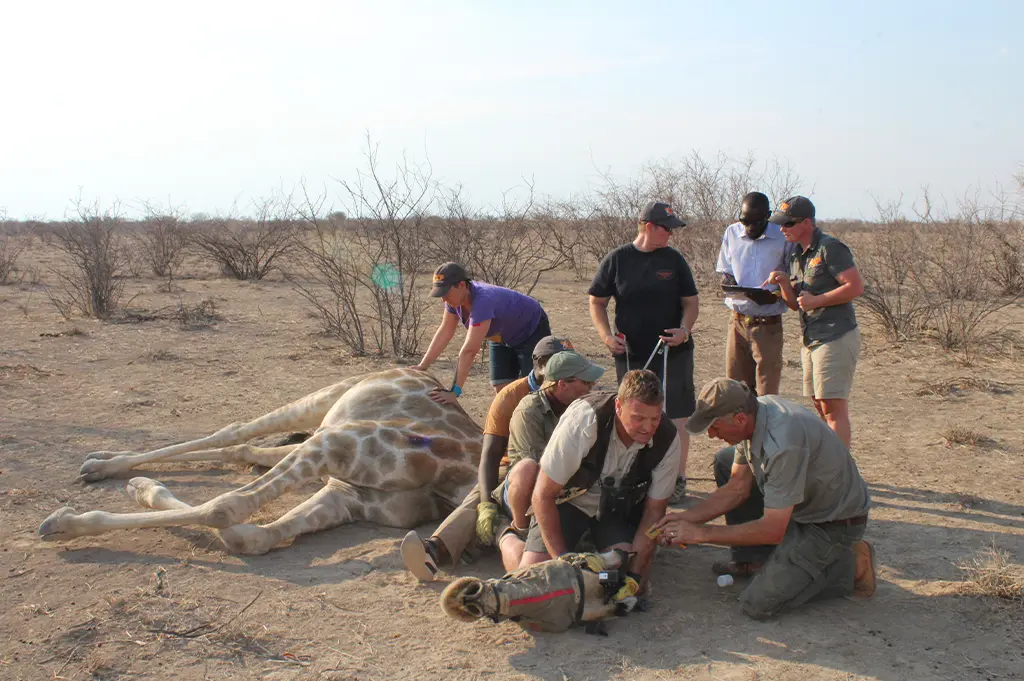
The Etosha Heights Conservation Centre (EHCC) serves as a dynamic hub for research, monitoring, and conservation learning, operating in collaboration with the Giraffe Conservation Foundation, the Namibia University of Science & Technology, and other key partners.
From collaring elephants and lions to tracking giraffe movements and analysing predator–prey relationships, the work undertaken at EHCC provides critical, field-based data. These insights help shape effective conservation strategies across nearly two million hectares of the Greater Etosha Landscape, ensuring that management decisions are informed by science and grounded in long-term ecosystem health.
Species Recovery & Cheetah Conservation
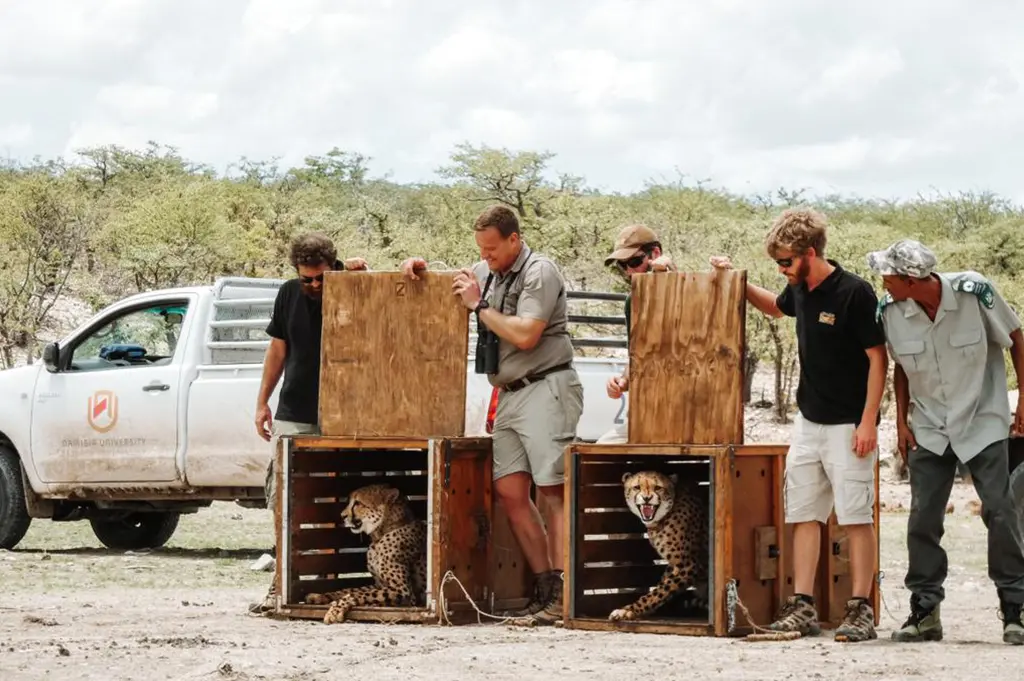
In 2022, the Natural Selection Foundation played a key role in the reintroduction of four cheetahs to Etosha Heights, working in partnership with the Cheetah Conservation Fund (CCF) and the Namibia University of Science & Technology. Rescued from human–wildlife conflict areas, these cheetahs were given a renewed chance to thrive in a secure, prey-rich landscape.
Their movements and adaptation were closely monitored by researchers, generating valuable data that extends beyond the reserve itself. The findings have contributed to broader, global understanding of cheetah ecology and reintroduction success, helping to inform future conservation efforts for one of Africa’s most threatened predators.
Building Knowledge for the Future
Etosha Heights is not only safeguarding wildlife; it is actively investing in the future of conservation. Through hands-on research placements and applied fieldwork, the Etosha Heights Conservation Centre is helping to train the next generation of conservation leaders.
To date, EHCC has supported Bachelor graduates, Honours and Master’s students, alongside African veterinarians gaining advanced training in wildlife health and management. By combining real-world experience with rigorous science, the reserve is building local and regional capacity that will shape conservation outcomes for decades to come.
Wild Shots Outreach
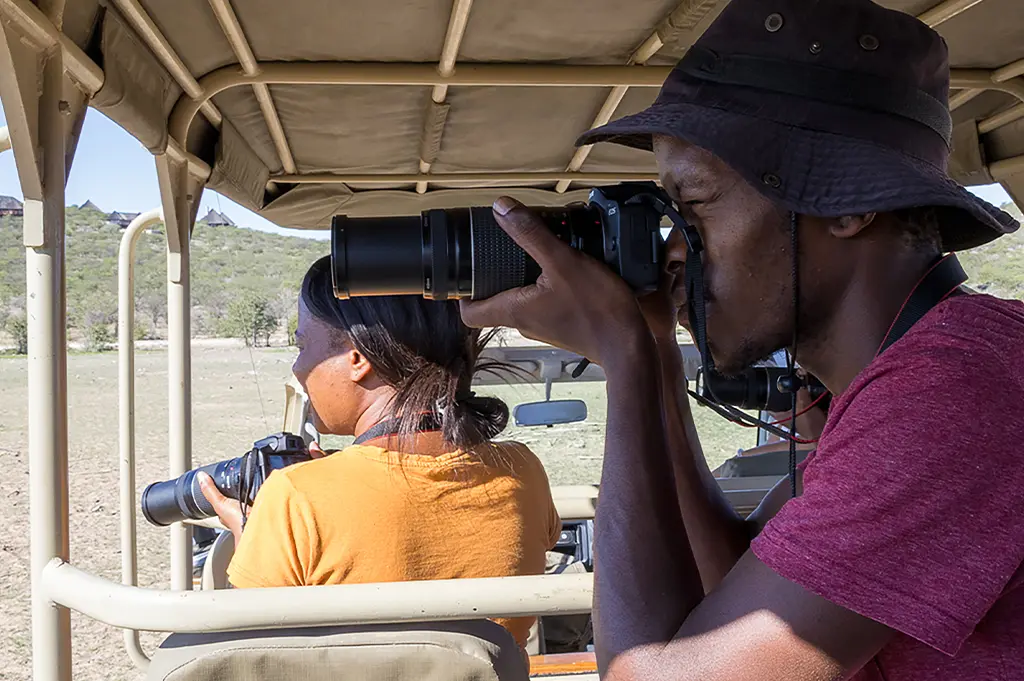
The reserve also supports Wild Shots Outreach, a conservation education initiative that uses photography as a powerful tool for connection and learning. Through workshops hosted at Etosha Heights’ camps, unemployed young adults from surrounding communities are introduced to photography, conservation principles, and new ways of seeing and valuing the natural world.
By learning to frame wildlife and landscapes through a camera lens, participants develop practical skills alongside a deeper appreciation for the beauty and importance of protecting nature — fostering creativity, confidence, and a lasting conservation ethic within local communities.
“Conservation is a long game, and Etosha Heights is proving what’s possible when land is given back to nature—and when people work together with patience, respect, and vision.”
– Dr. Jennifer Lalley, Natural Selection Co-Founder and Chief Impact Officer
Every stay with Natural Selection is more than a safari experience — it is a direct investment in conservation success. Your visit helps sustain anti-poaching patrols, long-term wildlife monitoring, community partnerships, and education programmes that are shaping the next generation of conservationists.
A minimum of 1.5% of every booking at our three Etosha Heights lodges — Safarihoek, Safari House and Etosha Mountain Lodge — is reinvested into the reserve. This is complemented by the Community, Conservation and Reserve (CCR) Fee contributed by each guest, ensuring that critical conservation and community initiatives continue to thrive. When you stay with us, you become part of a story that truly matters.
Through responsible eco-tourism and long-term conservation commitment, we remain dedicated to protecting Etosha Heights for generations to come. Its success stands as powerful proof that when land is restored and stewardship is sustained, nature does more than recover — it flourishes. Occasionally, conservation gets it gloriously right.
If you’d like to learn more or chat to us about donating please email [email protected]
Click here to view our conservation video: A Conservation Success Story | Etosha Heights Private Reserve | Namibia