
Elephants occupy space like few other creatures on Earth. They are, after all, the largest land mammals alive today. Their colour palette rarely strays from dusty grey, their skincare routine involves liberal applications of mud, and subtlety is not exactly their strong suit. And yet, despite all this, elephants are almost universally adored. For many first-time safari-goers, they are the species that captures the heart.
Perhaps it’s the long lashes, the complex family bonds, the intelligence carried across generations, or the striking contrast between their immense size and gentle behaviour. All of this is true. But the importance of the African elephant (Loxodonta africana) runs far deeper than charisma alone. Their true value is written into the fabric of Africa’s ecosystems.
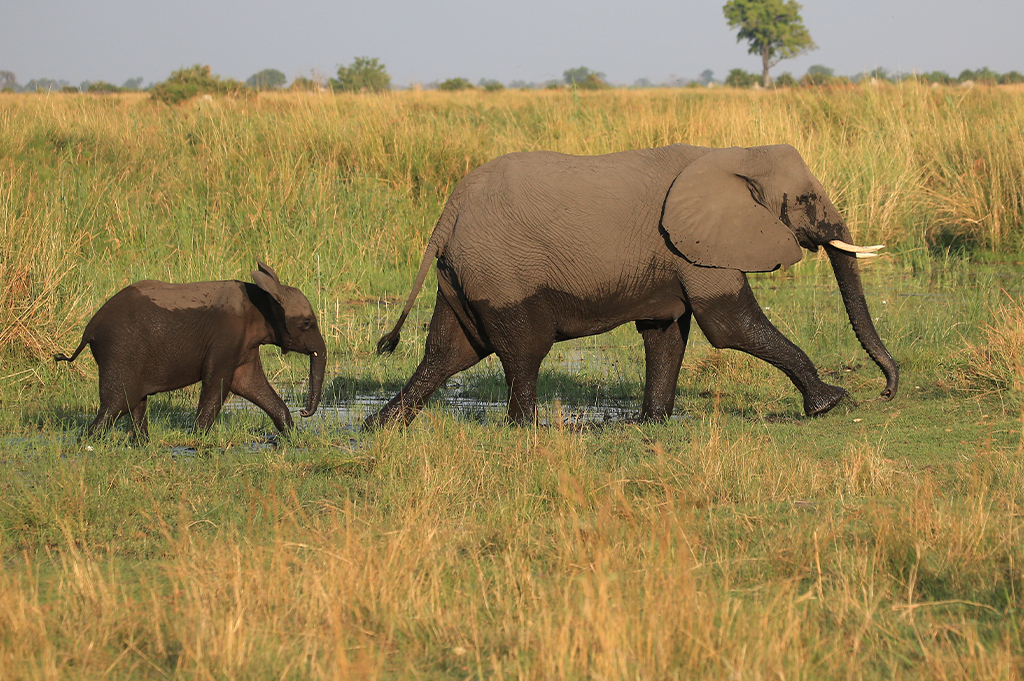
African elephants occur across 37 countries and exist as two distinct species: savanna elephants and forest elephants, named for the landscapes they inhabit. Forest elephants, adapted to the dense rainforests of the Congo Basin, play a particularly vital ecological role. It’s estimated that up to 30 percent of tree species in central African forests rely on elephants for seed dispersal and successful germination (WWF). By moving seeds across vast distances, elephants help shape forest composition, water systems, and plant diversity.
As a keystone species, elephants influence ecosystems in ways that benefit countless other animals. Their presence helps maintain habitat structure, supports biodiversity, and even contributes to climate regulation. Forest elephants, in particular, play a significant role in carbon storage. By shaping forest growth and encouraging larger, carbon-dense trees, a single forest elephant can increase a forest’s carbon capture potential across nearly 250 acres—an impact comparable to removing the annual emissions of more than 2,000 cars (Kent, 2024).
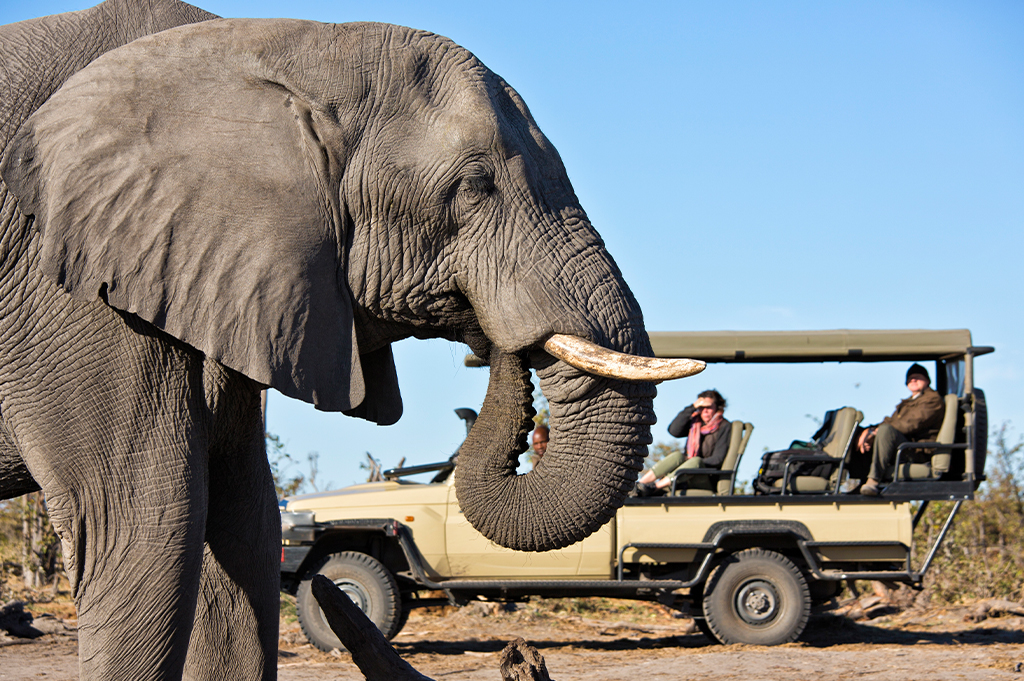
Elephants also support people. As one of Africa’s most recognisable wildlife species, they underpin tourism economies across the continent. In communities near protected areas, livelihoods often depend on visitors drawn by the chance to see elephants in the wild. Research by the World Wildlife Fund and the Universities of Vermont and Cambridge estimated that elephant poaching costs African economies around USD 25 million each year in lost tourism revenue.
Yet despite their ecological and economic importance, elephant populations continue to decline. Today, approximately 415,000 African elephants remain in the wild—down from an estimated 12 million a century ago. Forest elephants are classified as Critically Endangered by the IUCN, while savanna elephants are listed as Endangered. Although the international ivory trade was banned by CITES in 1989, illegal poaching remains a serious threat. At its peak, an estimated 20,000 elephants were killed annually for their tusks. Encouragingly, China’s domestic ban on the commercial ivory trade in 2018 has contributed to reduced demand and lower ivory prices.

Habitat loss and the fragmentation of ancient migration routes pose equally serious threats. As human populations expand, elephants increasingly encounter farms, settlements, and infrastructure built across traditional movement corridors. This results in human–elephant conflict, with elephants damaging crops, threatening livelihoods, and sometimes coming into dangerous proximity with people.
We support a range of initiatives designed to reduce this conflict and promote coexistence. These include conservation education programmes such as Lessons in Conservation, the Elephants for Africa Environmental Club at Moreomaoto Primary School, and Coaching Conservation. To combat poaching, we fund the Khwai Private Reserve Anti-Poaching Unit in Botswana. Rangers are equipped with binoculars, two-way radios, reporting tablets, and motorbikes that allow them to patrol even the most remote areas effectively.
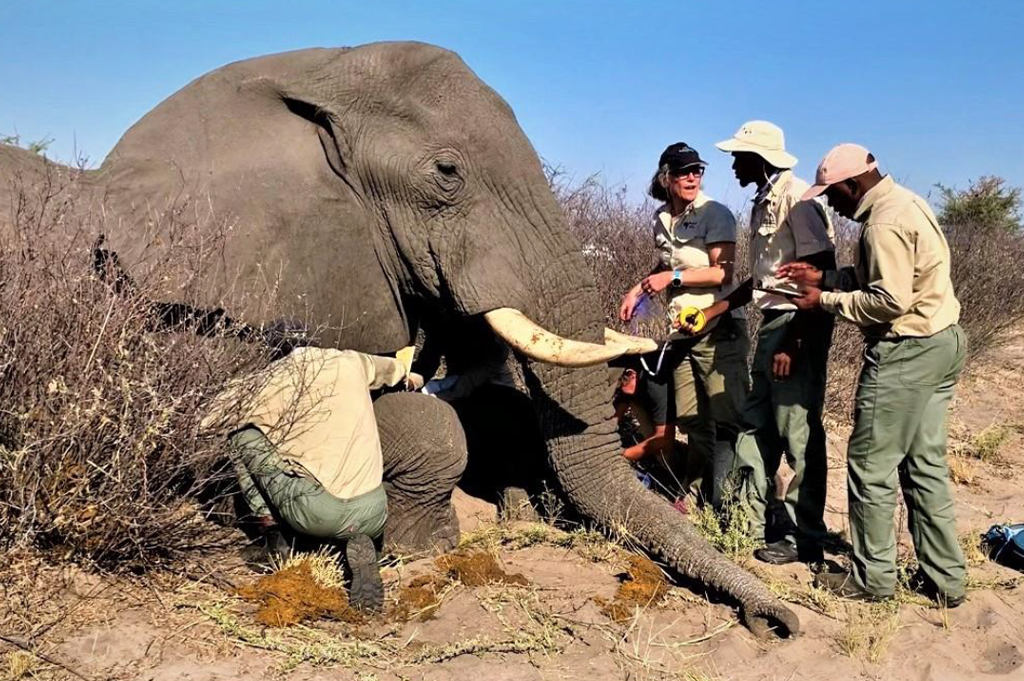
In the Makgadikgadi Pans region, we support large mammal migration and elephant research initiatives, including Elephants for Africa’s elephant collaring project, which recently tagged ten bull elephants. Tracking data allows researchers to understand elephant movement patterns, feeding behaviour, migration routes, and areas of conflict with people. This information is essential for identifying critical habitats and designing effective conservation strategies. We also support Living with Wildlife Strategy Workshops and elephant fencing projects that help communities protect crops while allowing elephants to move safely through the landscape.
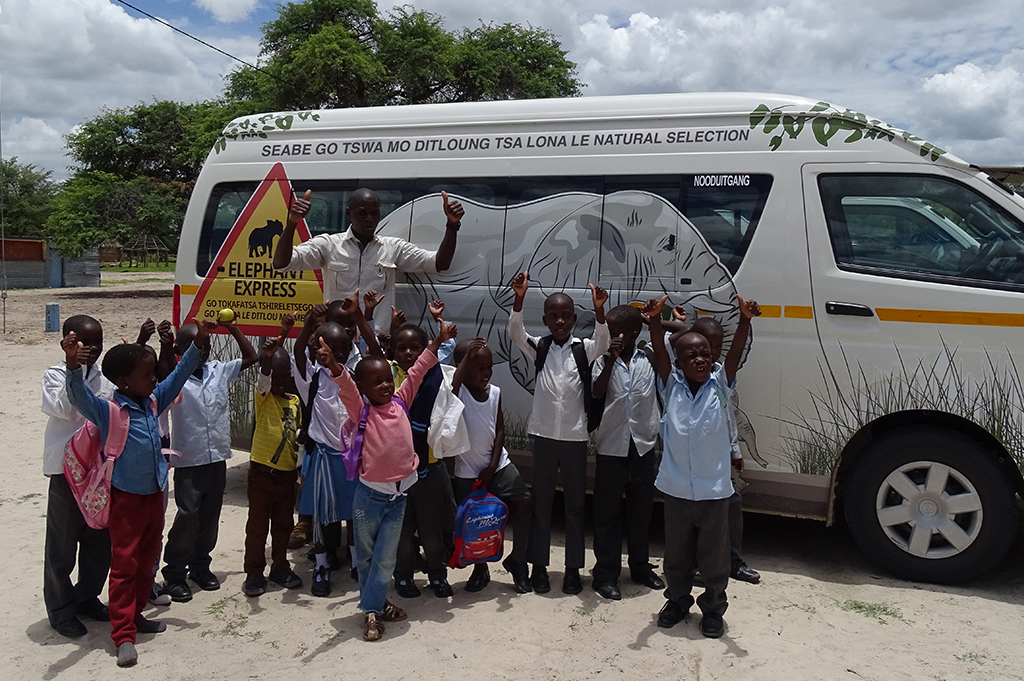
Human–elephant conflict is further addressed through projects such as the Botswana Predator Conservation BioBoundary Project and the Elephant Express buses. In northern Botswana, where many families rely on subsistence farming, crop loss, damaged infrastructure, and safety concerns are very real. The BioBoundary Project explores the use of plant-based, airborne repellents to deter elephants from crops and homes.
The Elephant Express buses were developed after community consultations highlighted the need for safe transport in areas with high elephant densities. In partnership with EcoExist and the Okavango Community Trust, and with insurance provided by SATIB and the Botswana Insurance Company, we support three buses that transport children safely to school and assist elderly or vulnerable community members in reaching clinics during the day.
These practical, community-driven solutions protect both people and elephants. They reduce risk, ease tension, and create space for coexistence. Yes, elephants take up a great deal of space—but they also shape, protect, and sustain the landscapes they inhabit. When elephants thrive, ecosystems function better, communities benefit, and the balance between people and wildlife becomes not only possible, but hopeful.