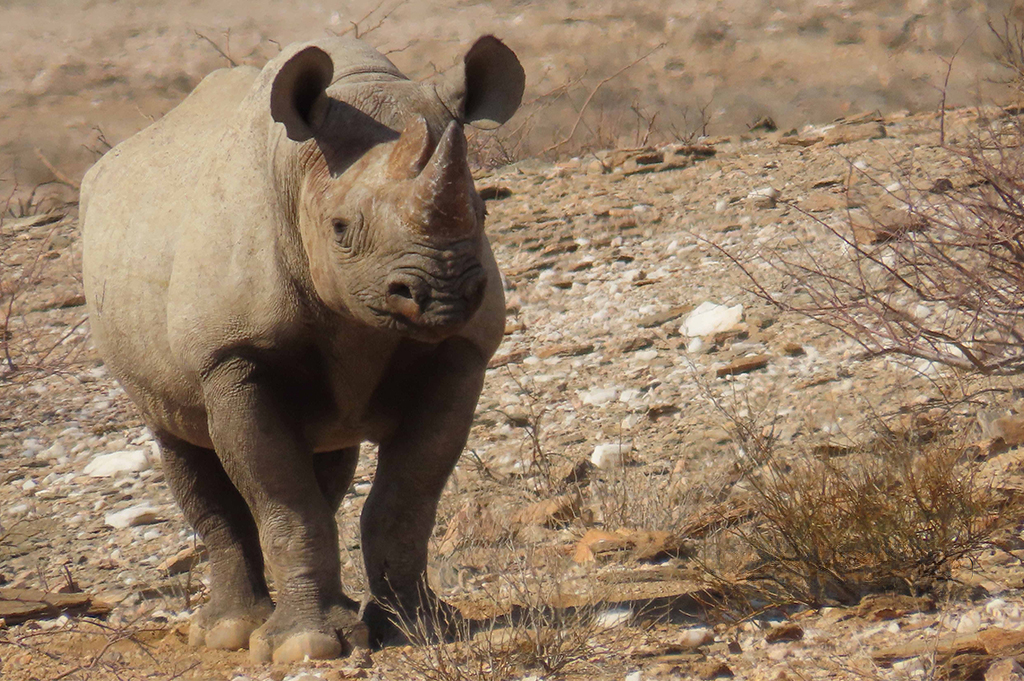
Short of leg, broad of body, unmistakably horned—early descriptions of rhinos must have sounded like riddles. And yet, in the wild, the rhino is a masterpiece of self-sufficiency. That is, when left alone. Unfortunately, human interference has dramatically altered their fate. At the start of the 20th century, an estimated 500,000 rhinos roamed across Africa and Asia.
Today, that number has plummeted to around 27,000. Of these, just 6,500 are black rhinos (Diceros bicornis), a species classified as Critically Endangered by the IUCN.
While these figures are sobering, there is cause for cautious optimism. Thanks to focused, long-term conservation action, black rhino numbers are slowly increasing in certain regions—proof that determined intervention can still turn the tide.
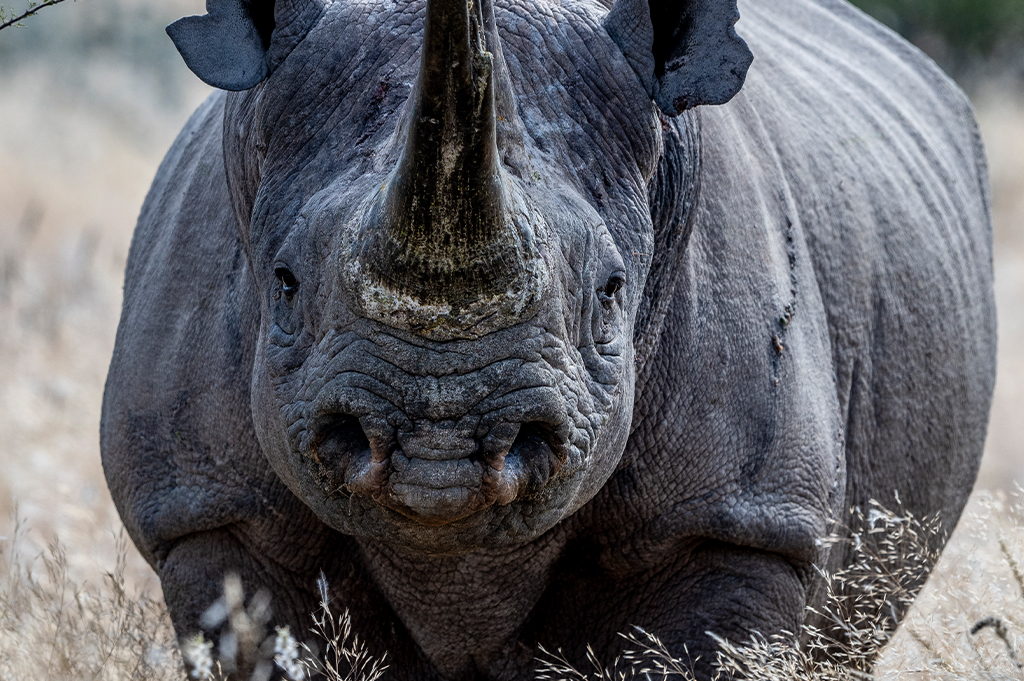
There is a certain irony in the phrase “giving it horns,” because the fight to save rhinos demands exactly that: resilience, persistence, and resolve. Save The Rhino Trust (SRT) embodies this spirit, which is why we are supporting their black rhino relocation and introduction programme in Namibia’s remote Kunene region.
“The relocation is important for several reasons,” explains Andrew Malherbe, Chief Operating Officer of Save The Rhino Trust Namibia. “Biologically, expanding available rangeland increases genetic diversity and strengthens population resilience. Rhinos are also an umbrella species—protecting them brings wider conservation benefits for other wildlife and habitats.”
Kunene is home to the largest free-roaming black rhino population on Earth. This programme focuses on expanding the breeding range by introducing female rhinos into carefully selected areas. “The rhinos are relocated from within the same conservation landscape,” Andrew adds. “They form part of an established meta-population and are well adapted to arid environments.”
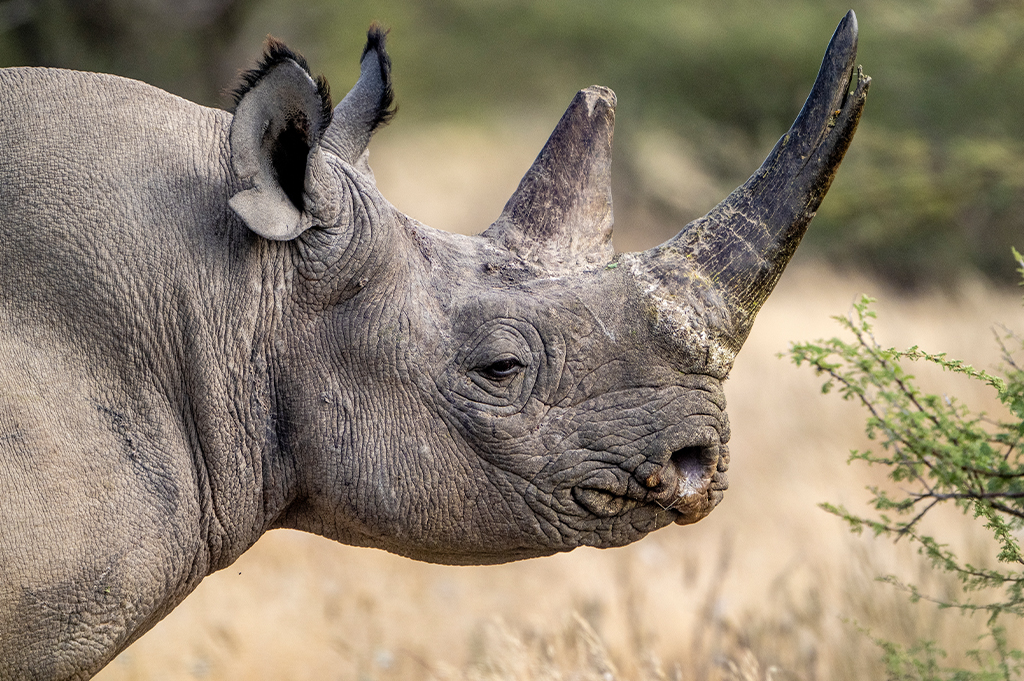
Protecting free-roaming rhinos across vast, rugged terrain is no small task. Long-term monitoring, intelligence gathering, and collaboration between multiple stakeholders are essential to ensure the animals can settle and thrive without threat.
Save The Rhino Trust has safeguarded desert-adapted black rhinos for decades and has expanded its ranger teams to match the growing conservation footprint. Community involvement is central to this effort. Many local residents are engaged in ecotourism, and SRT’s work actively empowers communities to take part in rhino protection—combining employment, stewardship, and pride of place. Much of the work, however, remains physically demanding, with rangers spending long hours on foot across unforgiving terrain.
“From an economic perspective, there is also growing demand for rhino trekking tourism in Kunene,” Andrew notes. “This creates jobs, generates income for local communities, and—if structured correctly—can sustainably fund conservation efforts within the conservancy.”
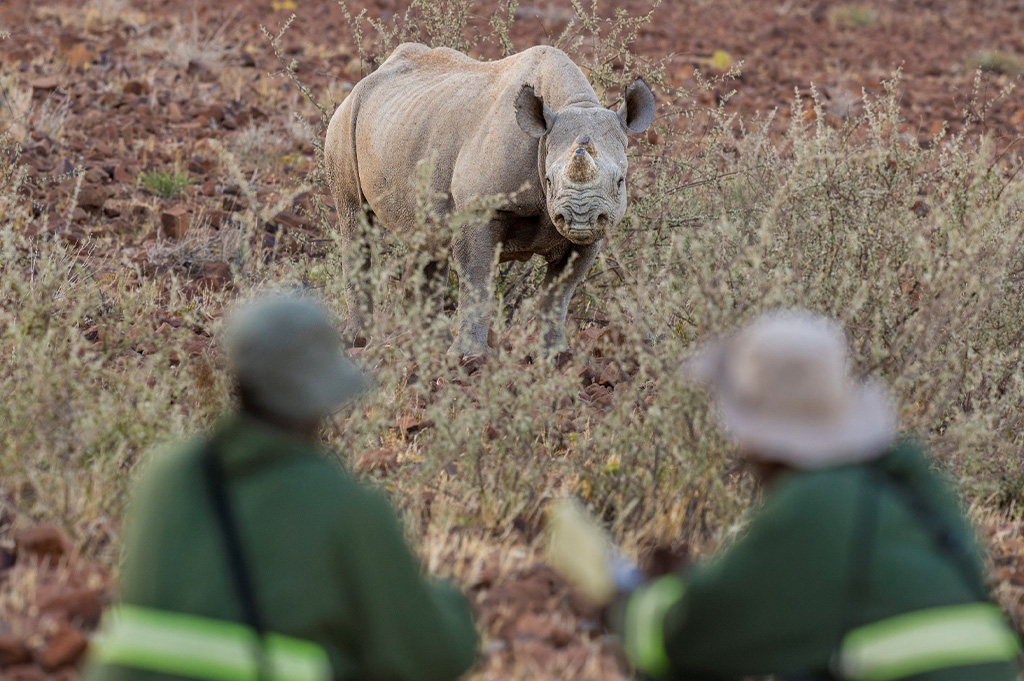
The scale of on-the-ground commitment is reflected in recent figures. In the past year alone, Save The Rhino Trust, Integrated Rural Development and Nature Conservation (IRDNC), and partner conservancies recorded 11,550 ranger field days, covered more than 105,000 kilometres, and logged 5,002 rhino sightings.
The Natural Selection Foundation has supported this work by funding a satellite communication system, improving real-time coordination between rangers, field operations, and conservancies. Reliable communication strengthens response times, streamlines deployments, and enhances overall security across the landscape.
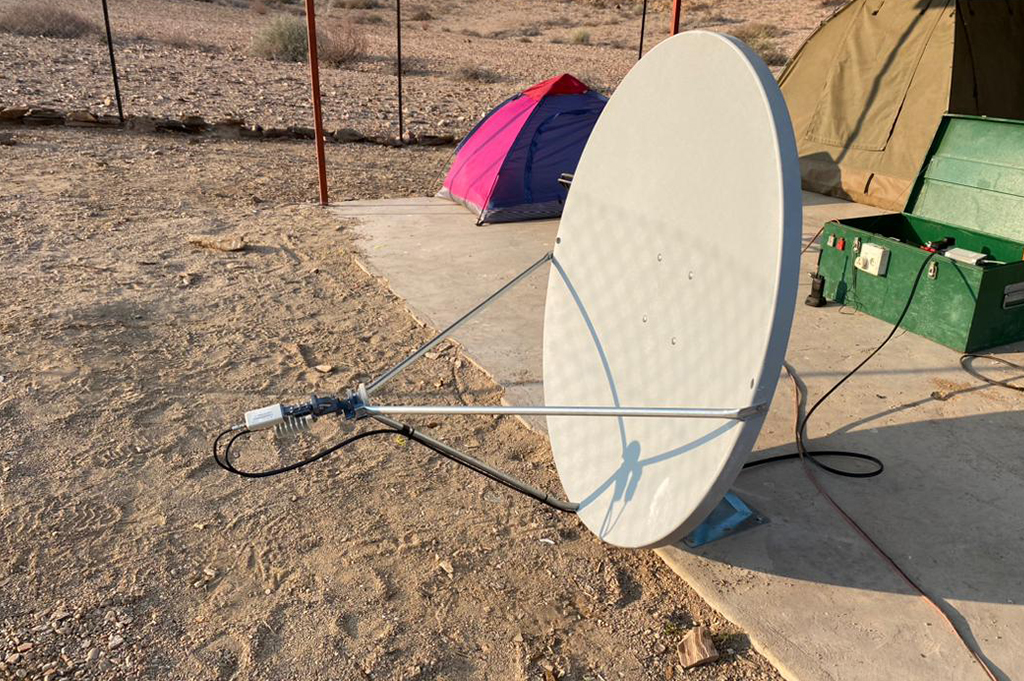
“The fact that surrounding communities actively petitioned government for the rhinos to return speaks volumes,” says Andrew. “Local commitment is one of the strongest deterrents to poaching. Our goal is to ensure the area is fully prepared—through improved infrastructure, communication, and proactive monitoring—before and after relocation.”
Despite these efforts, threats persist. Alongside poaching, mining interests pose a growing risk to rhino rangelands. Save The Rhino Trust is working with Namibia’s Ministry of Environment, Forestry and Tourism (MEFT) to secure exclusionary status for critical conservation areas, helping to protect them from extractive activities.
“Conservation success is never static,” Andrew reflects. “We’re aiming for zero poaching, strong partnerships between communities and tourism operators, and transparent, long-term benefits for all involved. True success means triple wins—for rhinos, local communities, and the private sector.”
Our continued support of Save The Rhino Trust reflects a shared belief: that with commitment, collaboration, and courage, rhinos can have a future in Namibia’s wild landscapes.